

A damaged, weakened, or severely worn tooth can make eating uncomfortable and may become more vulnerable to additional fractures, decay, or infection. A custom dental crown can protect the remaining tooth structure while restoring the tooth’s strength, shape, function, and appearance.
Florida Smiles Dental provides custom dental crowns in Fort Lauderdale, FL, for patients who need to repair and protect compromised teeth. Our dental team evaluates the condition of your tooth, gums, bite, and surrounding structures before recommending the most appropriate restorative solution.
We also offer advanced same-day crown technology for qualifying cases, allowing many patients to have their tooth prepared, digitally scanned, and restored during a single visit. Contact Florida Smiles Dental to schedule a consultation and determine whether a traditional or same-day dental crown is right for you.
A dental crown is a custom-made restoration that covers the visible portion of a tooth above the gumline. It is sometimes described as a cap because it surrounds and protects the remaining natural tooth structure.
Crowns are designed to restore the tooth’s original size, contour, strength, and function. They can also improve the appearance of teeth affected by extensive discoloration, irregular shape, fractures, or previous dental treatment.
Each crown is carefully designed to fit against the neighboring teeth and make comfortable contact with the opposing tooth when you bite. Depending on your needs, a crown may be made from porcelain, ceramic, zirconia, metal, porcelain fused to metal, or another restorative material.
The most appropriate material depends on factors such as:
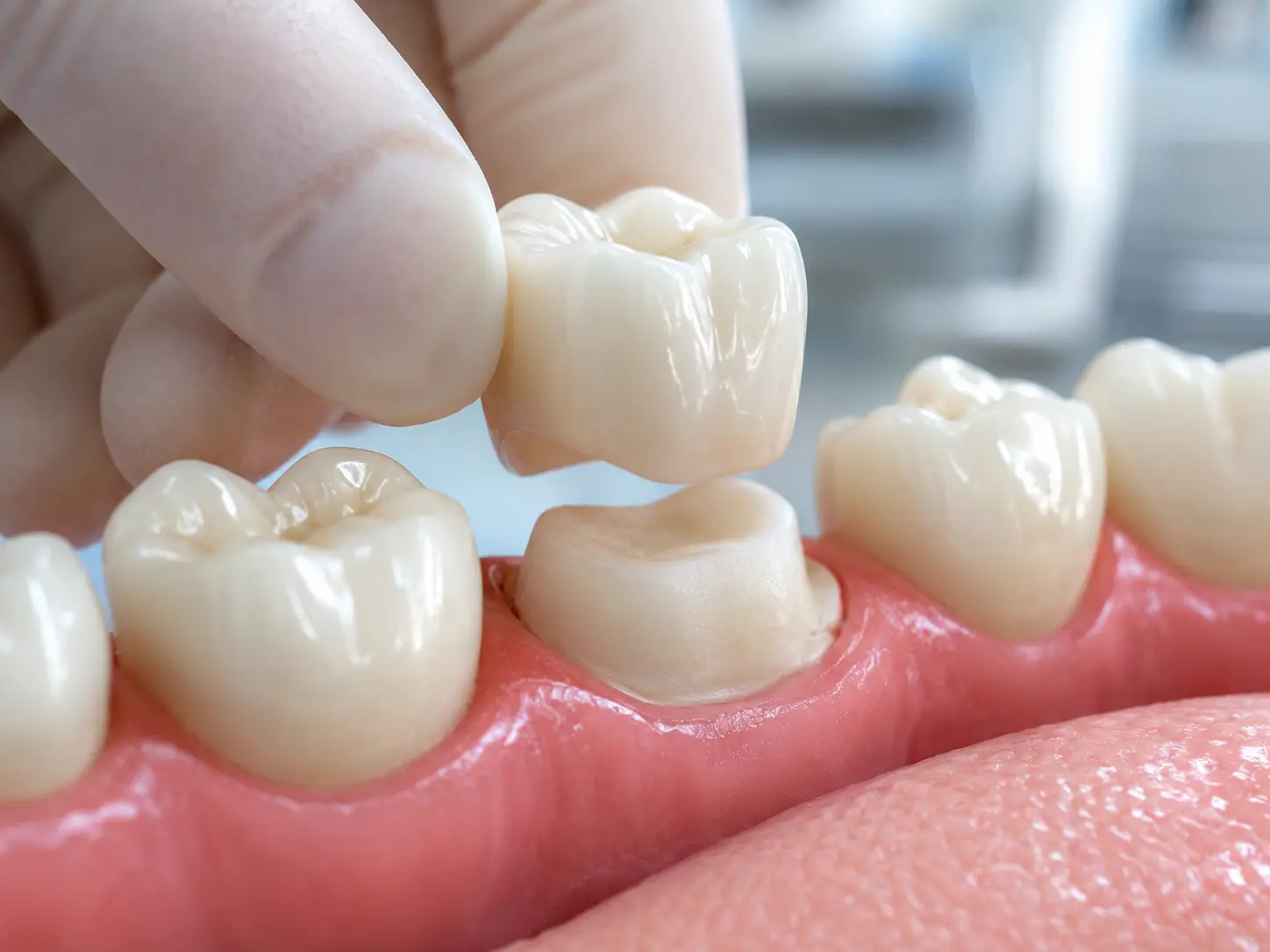
A dental crown may be recommended when a tooth is too damaged or weakened to be reliably restored with a regular dental filling.
Crowns are commonly used to:
Not every damaged tooth automatically requires a crown. Minor cavities, chips, or cosmetic concerns may sometimes be treated with fillings, dental bonding, veneers, or other procedures.
Our dental team will examine your tooth and explain why a crown may be recommended, what alternatives are available, and what could happen if the damage is left untreated.
Dental damage is not always immediately visible. A tooth may look relatively normal but still have a deep crack, extensive decay, or insufficient structure to withstand normal biting forces.
You should schedule a dental evaluation if you experience:
Sudden or severe pain may indicate a deeper dental problem. Depending on the condition of the tooth, additional treatment such as root canal therapy may be necessary before a crown can be placed.
Traditional dental crowns usually require at least two appointments. The tooth is prepared during the first visit, and a temporary crown is worn while a dental laboratory creates the final restoration.
Florida Smiles Dental offers advanced technology that allows us to complete many dental crowns during a single appointment. Same-day crowns eliminate the need for a temporary restoration and a separate visit for final placement in qualifying cases.
During the same-day crown process, we can digitally capture the shape of your prepared tooth and surrounding teeth. Specialized CAD/CAM technology is then used to design the restoration.
The design is sent to an in-office milling unit, which shapes the crown from a solid block of tooth-colored material. Once the crown is ready, our dentist checks its fit, shape, contacts, color, and bite before securely bonding it to the tooth.
Same-day crown treatment may provide several advantages:
Same-day treatment may not be appropriate for every tooth or every clinical situation. The location of the tooth, type of restoration needed, available materials, and complexity of the case will determine whether same-day treatment is recommended.
Some crowns are still best completed through a dental laboratory. Laboratory-made crowns may be recommended when a case requires a specific material, highly detailed color matching, multiple coordinated restorations, or another level of customization.
Traditional crown treatment generally requires two visits.
During the first visit, the tooth is prepared and an impression or digital scan is taken. The records are sent to a dental laboratory, where the final crown is created.
A temporary crown is placed to protect the tooth while the permanent restoration is being fabricated.
At the second visit, the temporary crown is removed. The final restoration is examined and adjusted to ensure that it fits properly and feels comfortable when you bite.
Once the fit, color, shape, and bite are approved, the crown is permanently cemented or bonded in place.
Although the exact process may vary, dental crown treatment typically involves several important stages.
Your dentist will examine the damaged tooth, surrounding gum tissue, neighboring teeth, and your bite. Digital X-rays may be taken to evaluate the tooth roots, supporting bone, and extent of decay or damage.
If the tooth has deep decay, infection, or nerve damage, root canal therapy may be necessary before the crown is placed.
The area is numbed with local anesthesia to help keep you comfortable. Damaged or decayed material is removed, and the tooth is carefully reshaped to create enough space for the crown.
If a significant portion of the tooth is missing, a buildup material may be used to create a stable foundation for the restoration.
A detailed record of the prepared tooth and surrounding teeth is taken. This information is used to design a crown that fits accurately within your bite.
Depending on the treatment process, we may use a digital intraoral scanner instead of traditional impression material.
The crown is designed to reproduce the natural shape and function of the tooth. The contours must allow the crown to fit comfortably against adjacent teeth while maintaining enough space for proper cleaning.
The biting surface is also designed to contact the opposing teeth without creating excessive pressure.
Before the crown is permanently attached, your dentist will check:
Any necessary adjustments are made before the crown is bonded or cemented in place.
Dental crowns are available in several materials. Each option has different advantages related to strength, appearance, durability, and cost.
Porcelain and ceramic crowns are valued for their natural appearance. Their color and translucency can be customized to coordinate with the surrounding teeth.
These materials are often selected for visible areas of the smile, although modern ceramics may also provide enough strength for many back teeth.
Zirconia is a strong ceramic material that can withstand significant biting pressure. It is commonly considered for molars and other teeth that require additional durability.
Zirconia crowns can also be made in tooth-colored shades, providing a combination of strength and aesthetics.
A porcelain-fused-to-metal crown has a metal base covered by tooth-colored porcelain. The internal metal provides strength, while the porcelain improves the appearance of the restoration.
In some cases, the metal edge may become visible near the gumline over time, particularly if the gums recede.
Metal crowns may be made from gold or other dental alloys. They are highly durable and require less removal of natural tooth structure in certain cases.
Because of their metallic color, they are generally used in areas that are less visible when smiling.
Resin crowns are made from tooth-colored composite material. They may cost less than certain ceramic options but are generally more susceptible to wear, staining, or fracture.
Resin is also commonly used for temporary crowns while a permanent restoration is being fabricated.
Root canal therapy removes infected or damaged tissue from inside a tooth. Although this treatment can save the natural tooth, the remaining tooth structure may be weakened by previous decay, fractures, or the removal of dental tissue needed to access the root canals.
A dental crown is frequently recommended after root canal treatment, particularly for molars and premolars that withstand substantial chewing pressure.
The crown helps protect the treated tooth from fracturing and restores its ability to function more normally. In some cases, a dental buildup or post may be needed to provide adequate support beneath the crown.
Whether a crown is required depends on the tooth’s location, the amount of remaining structure, and the way the tooth contacts the rest of your bite.
Cracks and fractures can allow bacteria to enter the tooth and may worsen under repeated chewing pressure. A crown can surround the damaged tooth and help hold the remaining structure together.
However, not every cracked tooth can be saved with a crown. If the fracture extends deeply beneath the gumline or into the root, extraction may be necessary.
Early evaluation is important because cracks can spread over time. Contact our office if you experience sharp pain when biting, discomfort when releasing your bite, or sensitivity that comes and goes.
Although crowns are primarily restorative, they can also improve the appearance of certain teeth.
A crown may help correct a tooth that is:
Because a crown covers the full visible portion of the tooth, more natural tooth structure must usually be removed than with a veneer. For primarily cosmetic concerns, our dentist will compare crowns with veneers, bonding, whitening, or other available treatments.

A dental filling repairs a specific area of tooth decay or minor damage. It is placed within the remaining tooth structure and is generally appropriate when enough healthy enamel and dentin remain to support it.
A crown covers and protects the entire visible portion of the tooth. It may be more appropriate when damage is extensive or when a large filling would leave the tooth vulnerable to fracture.
Your dentist may recommend a crown instead of a filling when:
Crowns and veneers can both improve the appearance of a tooth, but they cover different amounts of tooth structure.
A veneer is a thin restoration placed primarily over the front surface of a tooth. Veneers are usually recommended for cosmetic concerns when the tooth is otherwise structurally healthy.
A crown surrounds the full visible portion of the tooth. It is generally recommended when the tooth needs substantial protection in addition to cosmetic improvement.
The condition of your tooth, the strength of your bite, and your goals will determine which restoration is more appropriate.
A properly planned dental crown can provide several restorative and cosmetic benefits.
Dental crowns can:
The goal of treatment is to create a restoration that feels comfortable, functions reliably, and blends naturally with your smile.
A dental crown can remain functional for many years, but no restoration is guaranteed to last forever.
Its lifespan depends on:
Even though the crown itself cannot develop a cavity, decay can form in the natural tooth near or beneath the crown’s edge. Gum disease can also affect the tissues supporting the tooth.
Regular dental visits allow our team to monitor the crown and identify early signs of wear, leakage, gum inflammation, or decay.
A crowned tooth should be cleaned just like your natural teeth.
To help protect your restoration:
Good hygiene is particularly important along the gumline, where the crown meets the natural tooth.
A temporary crown protects the prepared tooth while the permanent crown is being created. Because it is secured with temporary cement, it may occasionally become loose or fall out.
If this happens:
Do not use household glue or another non-dental adhesive to reattach the crown. Our dental team can evaluate the tooth and safely replace or recement the temporary restoration.
A dental crown should feel stable and comfortable. Schedule an examination if you notice:
These symptoms do not always mean the crown must be replaced. In some cases, the bite may need adjustment or the surrounding gums may need treatment. An examination is necessary to determine the cause.
Florida Smiles Dental combines personalized restorative care with modern dental technology to help patients protect damaged teeth and restore their smiles.
For appropriate cases, our digital technology allows us to prepare, design, fabricate, and place a custom dental crown during one appointment.
Intraoral scanning technology can capture detailed images of your tooth and surrounding structures without relying solely on traditional impression material.
We consider the condition of your tooth, your bite, oral health, aesthetic preferences, and long-term goals before recommending a crown.
The crown’s shade, shape, size, and contours are carefully planned to complement the surrounding teeth and your overall smile.
Our team provides general, restorative, cosmetic, implant, periodontal, endodontic, and emergency dental care. If your tooth requires additional treatment before receiving a crown, we can coordinate the necessary services.
We explain the reason for treatment, the available materials, the procedure, expected care, and alternative options so you can make an informed decision.
The tooth and surrounding area are numbed with local anesthesia during preparation. You may feel pressure or vibration, but you should not feel sharp pain during the procedure.
Some temporary sensitivity or gum tenderness may occur after treatment. Contact our office if pain becomes severe, worsens, or continues longer than expected.
Florida Smiles Dental offers same-day dental crowns for qualifying cases. Digital scanning and CAD/CAM technology allow many restorations to be designed, milled, and placed during one appointment.
Some cases may still require a laboratory-made crown or more than one visit. Your dentist will determine the appropriate process after examining your tooth.
Not every crowned tooth requires root canal therapy. A root canal is generally needed only when the dental pulp inside the tooth is infected, inflamed, or irreversibly damaged.
Your dentist will evaluate your symptoms, X-rays, and the condition of the tooth before recommending treatment.
The crown itself cannot decay, but the natural tooth underneath it can develop a cavity. Decay commonly begins near the edge where the crown meets the tooth.
Daily brushing, flossing, fluoride use, and regular dental visits help protect the underlying tooth.
Tooth-colored crowns are customized to complement the surrounding teeth. We consider color, translucency, shape, surface texture, and proportions when designing the restoration.
The selected material and location of the tooth can influence the final appearance.
Once the crown is securely placed and any numbness has worn off, most patients can gradually resume normal eating.
Avoid chewing while your mouth is numb because you may accidentally bite your cheek, tongue, or lip. Your dentist may also recommend temporarily avoiding extremely hard or sticky foods.
Dental whitening products do not significantly change the color of porcelain, ceramic, zirconia, or other crown materials.
Patients considering whitening may benefit from completing that treatment before selecting the final shade of a visible crown.
A damaged tooth may continue to weaken if it is not properly restored. A custom dental crown can protect the remaining structure, restore comfortable function, and improve the appearance of your smile.
Florida Smiles Dental provides traditional and same-day dental crowns for patients in Fort Lauderdale, Coral Ridge, Wilton Manors, Oakland Park, and surrounding Broward County communities.
Contact our Fort Lauderdale dental office today to schedule an examination. Our team will evaluate your tooth, explain your restorative options, and determine whether a custom dental crown can help preserve your smile.
Fort Lauderdale Office
255 SE 14th St #200
Fort Lauderdale, FL 33316
Phone: (954) 523-6525