
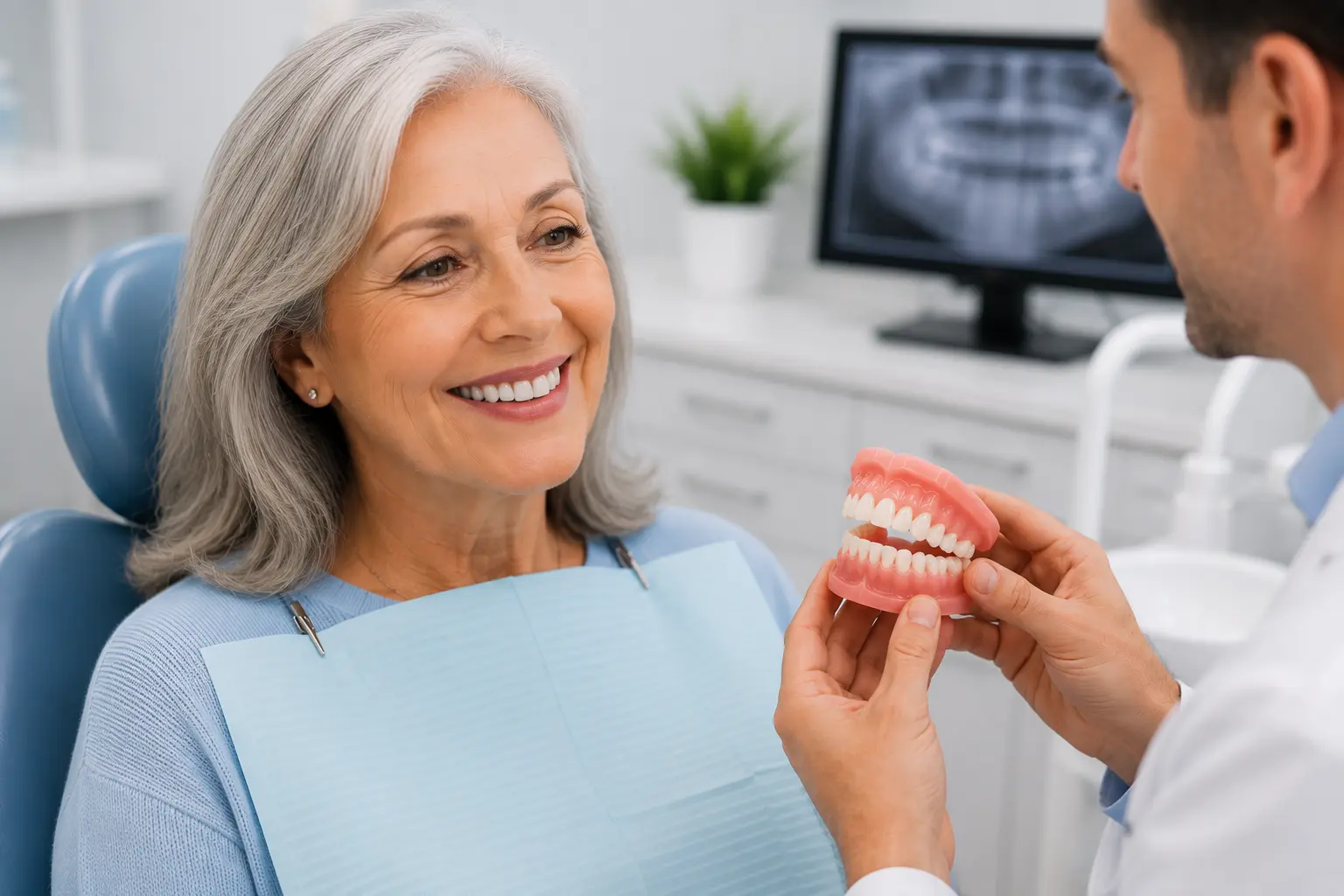
Missing teeth can make eating, speaking, and smiling more difficult. When several teeth are damaged or absent, a custom denture can restore important function while helping you feel more confident in everyday situations.
Florida Smiles Dental provides personalized denture treatment in Fort Lauderdale, FL. We evaluate your remaining teeth, gums, supporting bone, bite, facial appearance, and treatment priorities before recommending a restoration.
Depending on your needs, we may discuss complete dentures, partial dentures, immediate dentures, dental implants, or implant-supported restorations.
Contact our Fort Lauderdale dental office to schedule an examination and learn which tooth replacement options may be appropriate for you.
Tooth loss can happen gradually because of cavities or gum disease, or suddenly because of an accident or dental emergency.
Regardless of the cause, losing multiple teeth may affect:
Dentures replace missing teeth and help restore the visible structure of your smile. The restoration must also work with the muscles, gums, tongue, and jaw movements that control chewing and speech.
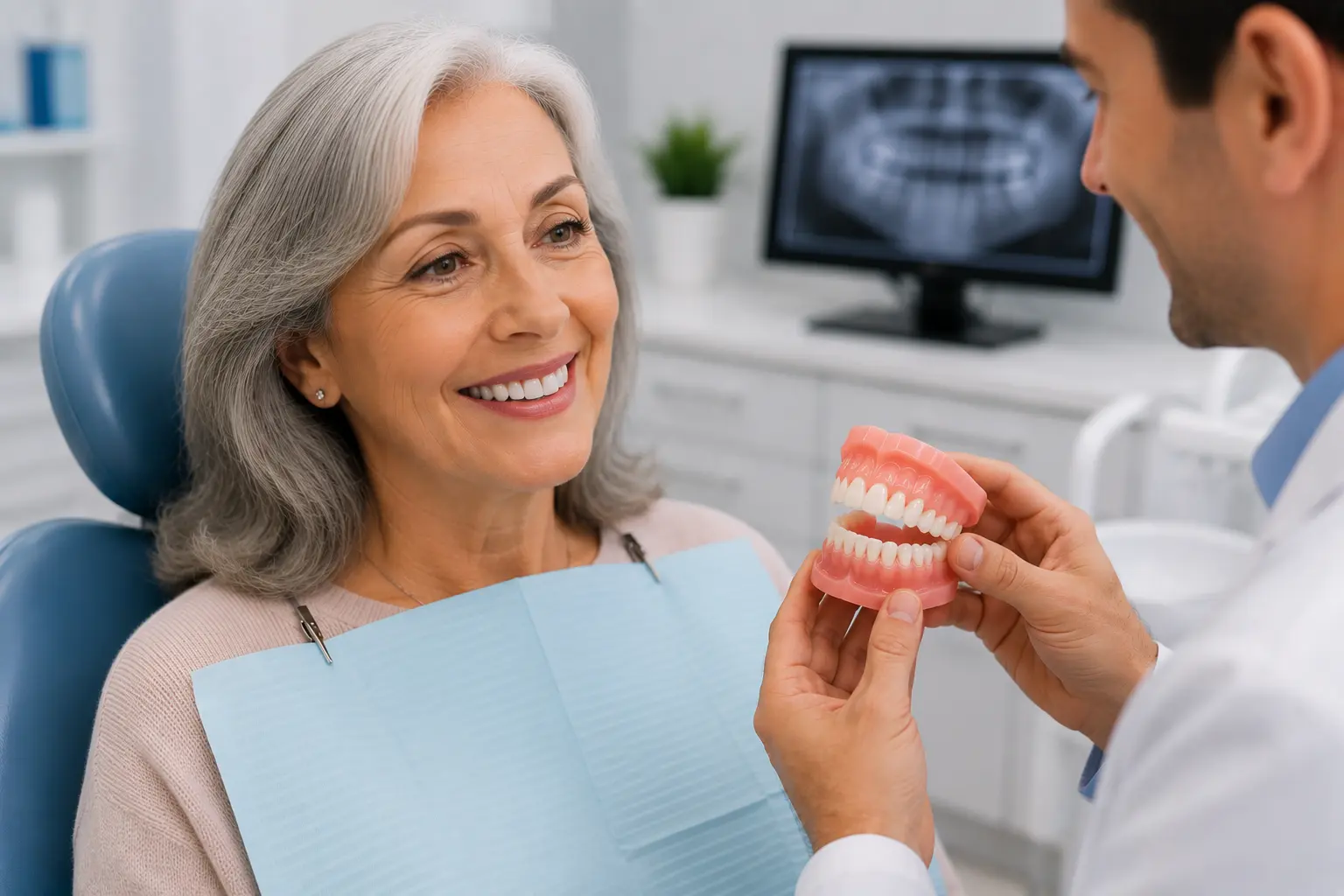
For this reason, denture treatment must be customized rather than selected as a one-size-fits-all appliance.
Our Fort Lauderdale dental team can evaluate several approaches to replacing missing teeth.
Full dentures replace all the teeth in the upper arch, lower arch, or both.
They rest on the gum tissues and are shaped according to the contours of the mouth. The artificial teeth are arranged to support your bite, smile, speech, and facial appearance.
Complete dentures may be considered when all teeth have already been lost or when remaining teeth have a poor long-term prognosis.
A partial denture is used when several teeth are missing but healthy natural teeth remain.
The appliance fills the open spaces and receives support from the remaining teeth, gums, or both. It can be removed for cleaning.
Partial dentures may help improve chewing and prevent neighboring teeth from drifting into the missing-tooth spaces.
Patients who require several extractions may be concerned about leaving the dental office without teeth.
An immediate denture can be prepared before the extraction appointment and inserted after the selected teeth are removed.
The tissues will change during healing, so adjustments and later modification are commonly needed. The immediate appliance may serve as a transitional restoration until the mouth is ready for a more definitive fit.
Dental implants can provide additional stability for a denture.
Rather than relying entirely on the gums for support, the restoration connects to implants placed in the jawbone. This can reduce movement and improve confidence during chewing and speaking.
Implant-supported treatment requires careful planning and may not be suitable for every patient. Bone levels, gum health, medical conditions, smoking, medications, and oral hygiene must be considered.
Not necessarily.
Healthy natural teeth are valuable and should generally be maintained when they can be restored and cleaned predictably.
If several stable teeth remain, a partial denture may replace only the missing teeth. If the remaining teeth are severely decayed, loose, fractured, infected, or affected by advanced bone loss, removing them may be considered as part of a complete denture plan.
Our dentist will evaluate each tooth individually and explain:
The final decision is made after reviewing the advantages, limitations, cost, maintenance, and expected outcome of each option.
The consultation begins with a discussion about your concerns.
Some patients are receiving their first dentures. Others already wear an appliance but are unhappy with looseness, discomfort, appearance, or difficulty eating.
Your examination may include:
If you already have dentures, bring them to your appointment even if you no longer wear them regularly. They provide useful information about your previous fit, bite, tooth arrangement, and concerns.
A denture is developed through a sequence of detailed records and evaluations.
Impressions capture the shape of the gums, remaining teeth, and surrounding tissues.
Accurate records help define the borders of the appliance and the areas available for support.
The upper and lower jaws must meet in a stable, comfortable relationship.
Measurements are taken to establish appropriate tooth height and determine where the replacement teeth should contact during chewing.
Artificial teeth are selected according to color, shape, width, length, facial proportions, and personal preferences.
Patients who have old photographs showing their natural teeth may bring them to the planning appointment for additional reference.
A wax trial may be used to preview the arrangement of the teeth before the final denture is processed.
This gives the dentist and patient an opportunity to evaluate the smile, facial support, speech, and bite.
At the placement visit, the completed denture is evaluated in your mouth.
Additional appointments may be needed to correct pressure areas and monitor your adaptation.
Eating with dentures is a skill that improves with practice.
Begin with foods that are soft and easy to control, such as:
Avoid trying to bite directly into hard foods with the front teeth during the initial adjustment period. This may cause the denture to tip.
Chew slowly and distribute food on both sides of the mouth. As your control improves, gradually add firmer foods.
Certain sounds may feel different when you first begin wearing dentures because the tongue must adapt to the new tooth positions and contours.
Helpful strategies include:
Temporary changes in speech are common. If a persistent clicking sound or significant movement occurs, an adjustment may be needed.
Minor tenderness can occur as the gums become accustomed to a new appliance. However, ongoing pain or open sores should not be considered normal.
Do not attempt to reshape the denture at home. Filing or heating the material can permanently damage its fit.
Contact our Fort Lauderdale office if:
When possible, wear the denture for a brief period before the adjustment appointment. This helps the dentist identify the exact pressure areas.
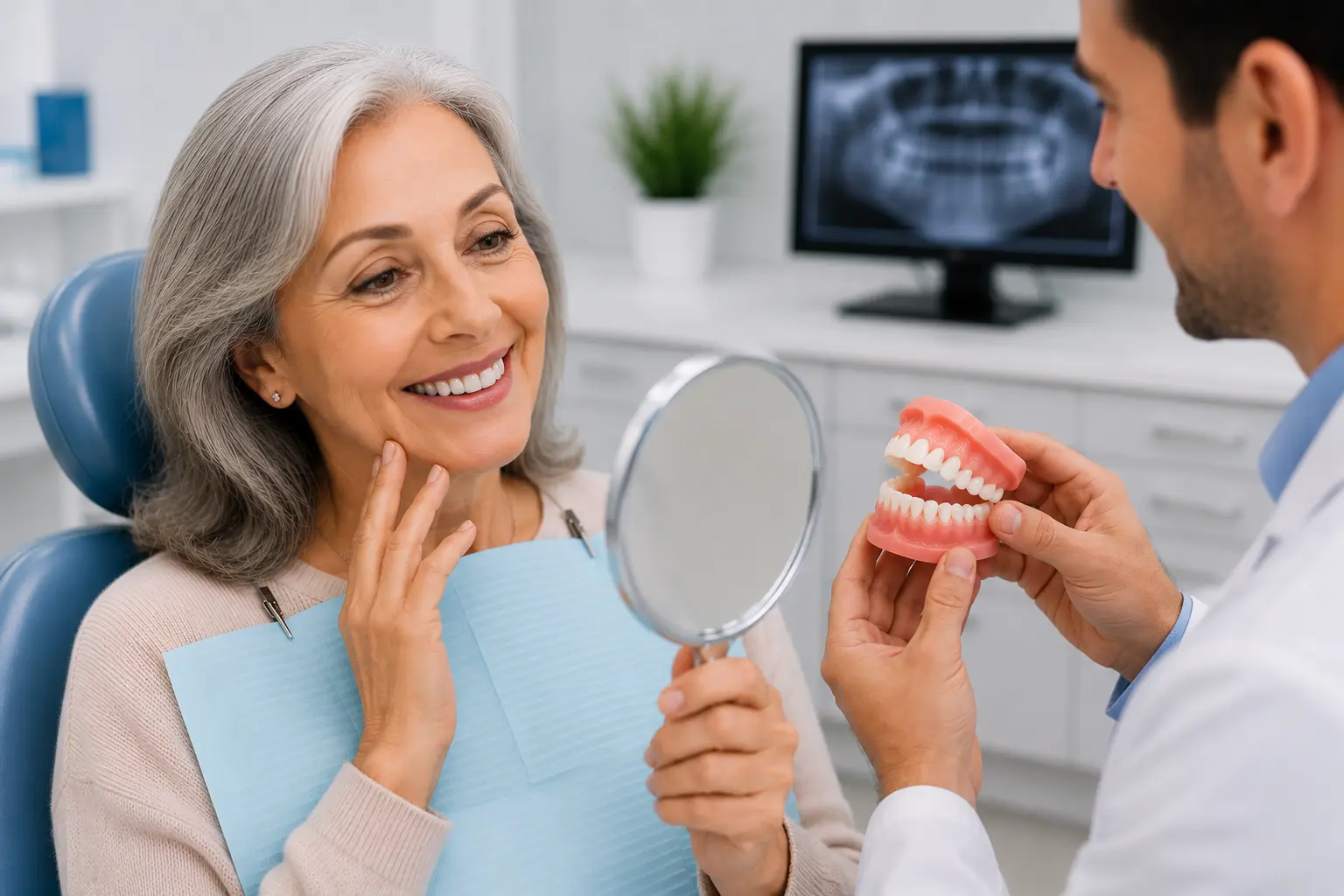
Clean the appliance every day, even when no natural teeth remain.
A daily routine should include:
Avoid bleach unless your dentist specifically approves it for your appliance. Certain cleaning products can damage metal components or change the color of denture material.
Dentures are exposed to chewing forces, temperature changes, cleaning products, and daily handling. Over time, they may wear or stop fitting correctly.
Professional attention may be necessary when:
Some dentures can be repaired or relined. Others should be replaced because the tooth positions, bite, or base no longer match the mouth.
Conventional dentures may be appropriate for patients who prefer to avoid surgery or want a removable option with a lower initial investment.
Implant support may be considered by patients who want greater stability and have adequate oral and medical health.
During your consultation, we can compare:
Choosing implants is not simply a cosmetic decision. The complete health of the mouth and the patient’s ability to maintain the restoration must be considered.
Our dental team focuses on both the technical and personal aspects of replacing missing teeth.
Patients receive:
Our goal is to help you understand what to expect before, during, and after treatment.