
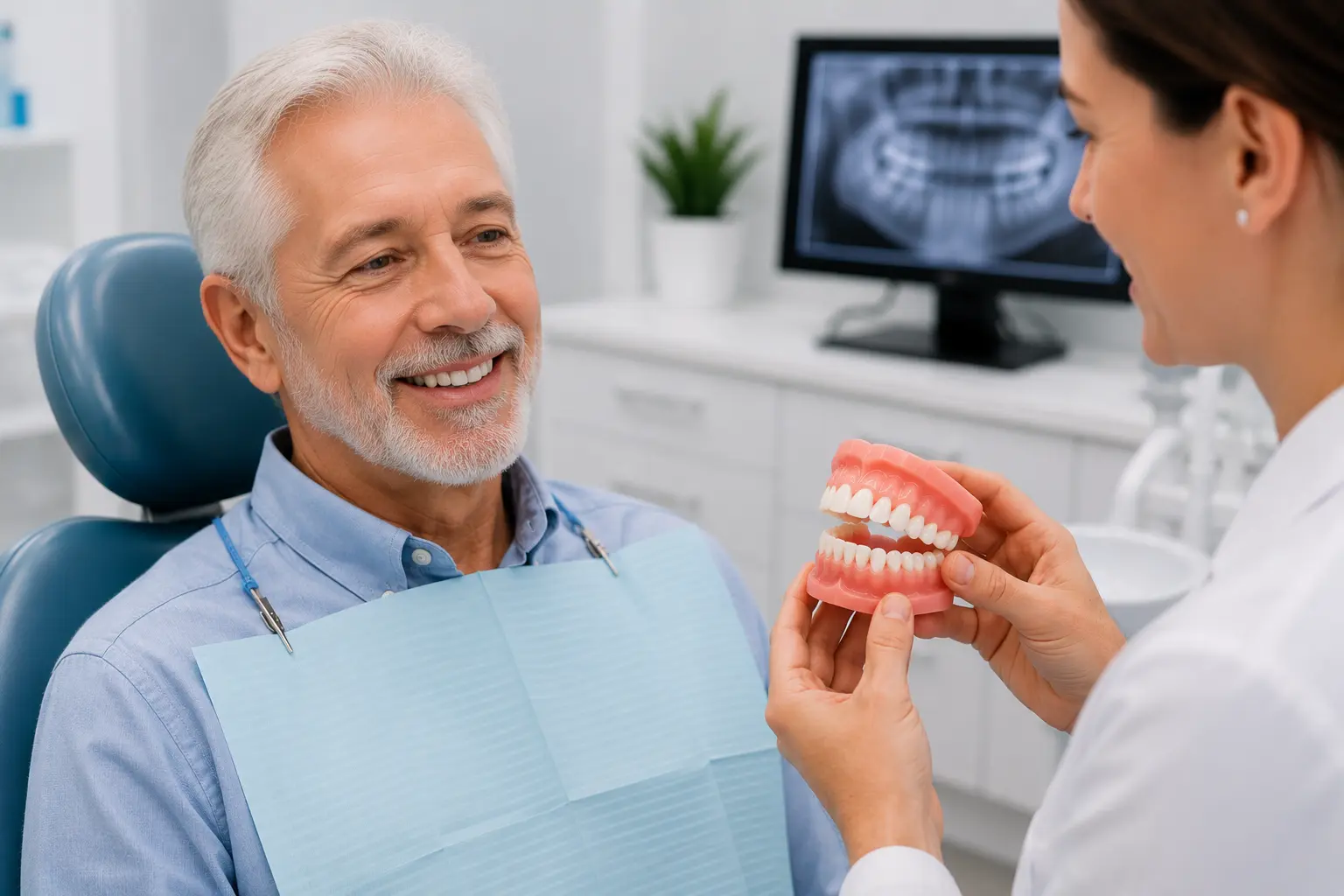
A comfortable smile plays an important role in how you eat, speak, and interact with the people around you. When multiple teeth are missing or an older denture no longer fits properly, personalized treatment can help restore function and confidence.
Florida Smiles Dental provides custom dentures in Lighthouse Point, FL, for adults who need to replace several teeth or a complete arch.
Our dental team can evaluate traditional full dentures, partial dentures, immediate appliances, and implant-supported solutions based on your oral health, priorities, and lifestyle.
Schedule a consultation at our Lighthouse Point office to discuss your current concerns and explore your tooth replacement options.
No two patients experience tooth loss in exactly the same way.
One patient may have several strong teeth remaining and need a partial denture. Another may require complete replacement of the upper or lower teeth. Someone who already wears dentures may primarily need improved stability, fit, appearance, or chewing ability.
Our recommendations are based on factors such as:
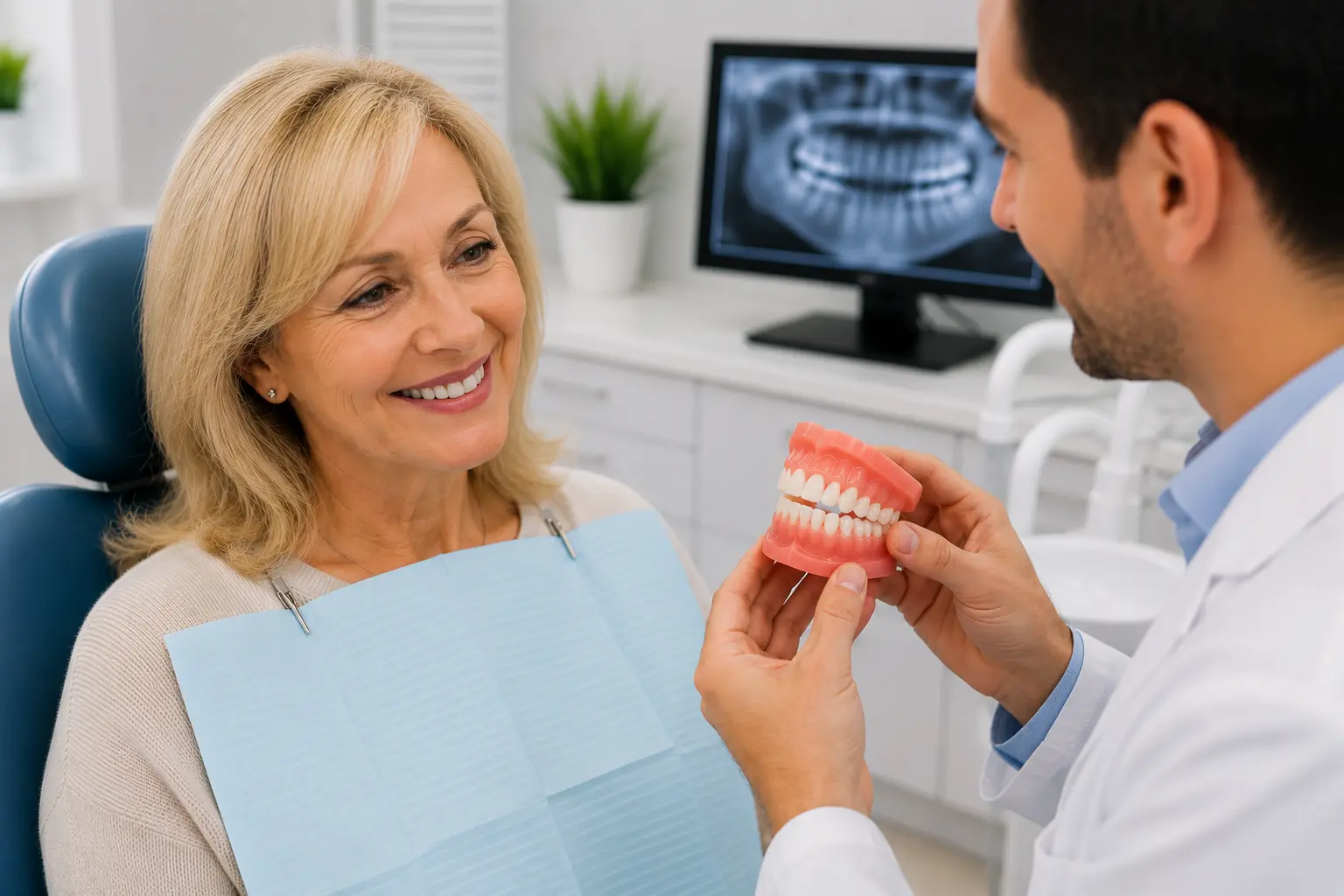
Understanding these factors allows us to create a treatment plan that is appropriate for the patient rather than relying on a standard appliance.
A full denture replaces all the teeth in one dental arch.
The pink base is shaped to resemble gum tissue, while the replacement teeth are arranged to recreate the smile and establish a functional bite.
A complete denture must accomplish several goals:
Upper and lower dentures function differently because the anatomy of each arch is different.
Upper dentures often receive more suction from the palate. Lower dentures have less surface area for support and must work around the tongue and moving tissues, making their stability more challenging for some patients.
Dental implants may be considered when additional lower denture stability is desired.
Losing several teeth does not always mean that all remaining teeth should be removed.
A removable partial denture can replace missing teeth while maintaining natural teeth that are healthy enough to remain.
Partial dentures may be made with:
The design depends on the location of the missing teeth, the strength of the supporting teeth, the available space, and cosmetic considerations.
Remaining teeth may need fillings, crowns, gum treatment, or other care before the partial denture is completed.
Some patients want a restoration that moves less than a conventional denture.
Dental implants can act as anchors for a denture and help improve retention. The number and position of implants depend on the jawbone, type of restoration, and treatment objectives.
An implant-supported denture may be:
Implants may improve stability, but they do not eliminate the need for maintenance.
Patients must clean around the implant attachments and attend regular examinations. Components may also require replacement or adjustment as they wear.
Not every denture problem requires an entirely new appliance.
Depending on its condition, an existing denture may benefit from:
A small area of the denture is modified to relieve pressure or correct minor interference.
New material is added to the internal surface so it conforms more closely to the current shape of the gums.
The pink base material is replaced while some or all of the existing denture teeth are maintained.
A broken base, loose tooth, or other localized damage may sometimes be repaired professionally.
A denture that once felt comfortable may become loose as the bone and gum tissue beneath it change.
Signs that your appliance needs evaluation include:
Continuing to wear an unstable appliance can make eating more difficult and may irritate the supporting tissues.
Successful denture treatment begins before the final appliance is made.
We inspect the gums, tongue, cheeks, palate, remaining teeth, and other oral tissues.
Areas of inflammation, infection, decay, or suspicious tissue must be addressed appropriately.
Areas of inflammation, infection, decay, or suspicious tissue must be addressed appropriately.
X-rays may be used to evaluate remaining roots, impacted teeth, infections, and bone levels.
Impressions or digital records reproduce the shape of your mouth.
The height and relationship of the jaws affect chewing, speech, facial appearance, and denture stability.
Measurements help determine where the new teeth should meet.
Tooth size, shape, color, arrangement, and gum appearance are selected to complement your features.
The final teeth do not need to look unnaturally perfect. Small variations and appropriate proportions can create a more believable result.
Once the appearance and bite have been evaluated, the denture is completed using the selected materials.
At delivery, the fit and bite are checked again and post-placement instructions are provided.
The tissues and muscles need time to adapt to a new restoration.
You may initially experience:
Follow the recommended wearing schedule and attend adjustment appointments.
Do not use home tools, nail files, sandpaper, or heat to modify the appliance. Even a small change in the wrong area can affect the complete fit.
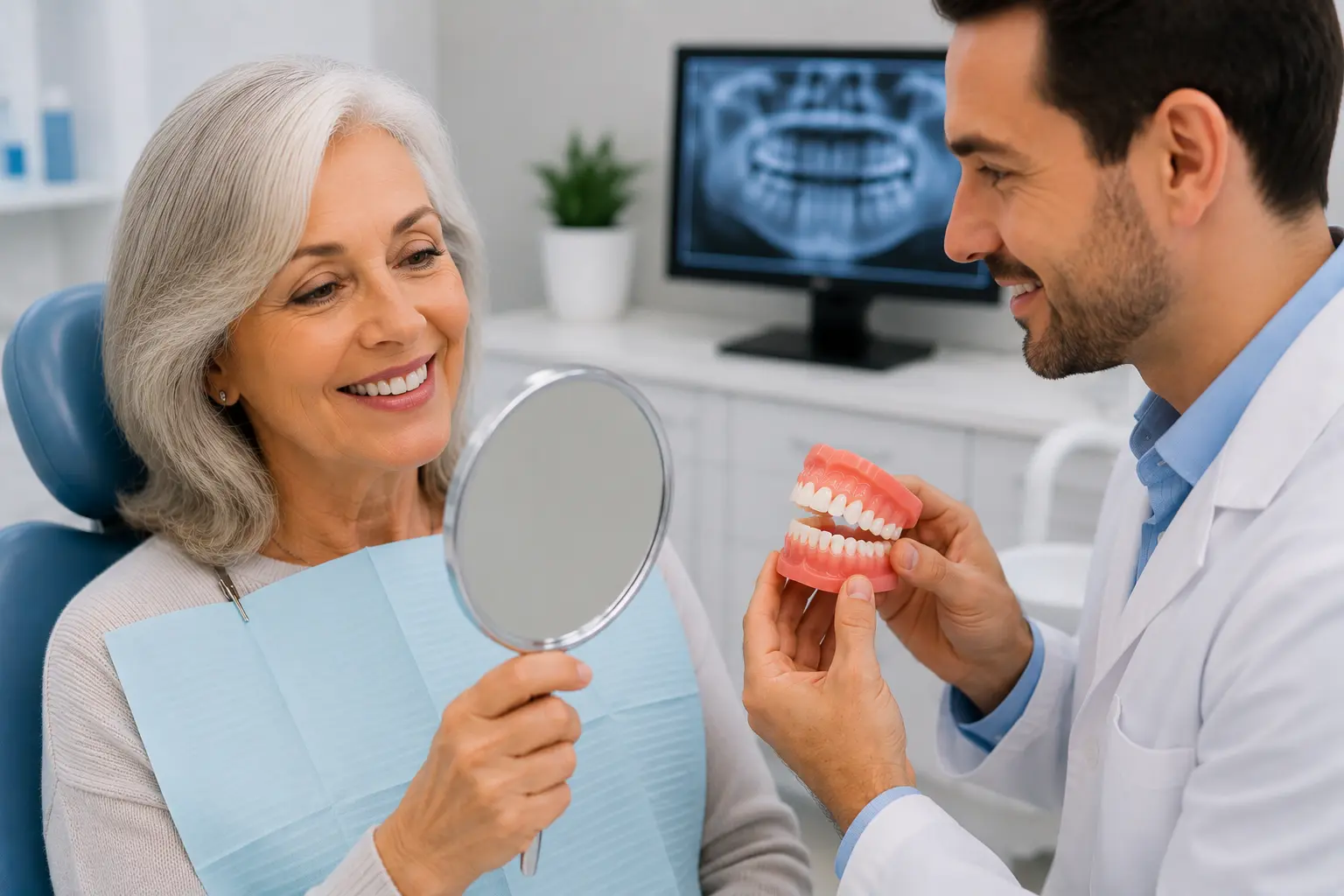
Patients without natural teeth still need regular oral healthcare.
Dental examinations allow us to assess:
Clean your mouth each morning and evening with a soft toothbrush or damp cloth. This removes plaque and stimulates the tissues.
Partial denture wearers must carefully clean the natural teeth that support the appliance, especially around clasps and contact areas.
Several habits can reduce the risk of inflammation beneath a removable appliance:
A white coating, redness, swelling, burning, or soreness beneath the denture may indicate irritation or infection and should be evaluated.
Nutrition remains important after tooth loss.
During the initial adjustment period, some patients limit themselves to a small number of very soft foods. This can make it difficult to maintain a balanced diet.
As you become more comfortable:
If a denture prevents you from eating a reasonable variety of foods, schedule an evaluation. The fit, bite, or design may need attention.
A small amount of denture adhesive may provide additional confidence for some patients, but it should not compensate for a severely loose appliance.
Using more and more adhesive may indicate that the gums and denture base no longer match.
Our dentist can determine whether the solution is:
Do not use adhesive to secure a broken denture.
Florida Smiles Dental offers comprehensive treatment for patients who are missing teeth or struggling with an older appliance.
Our Lighthouse Point patients benefit from:
We assess oral health, anatomy, existing dentures, functional concerns, and personal expectations before making recommendations.
Treatment may include conventional dentures, partial dentures, dental implants, implant-supported restorations, bridges, or other restorative care.
Tooth selection and arrangement are personalized to the patient’s smile, facial features, and preferences.
We provide follow-up evaluations and can assess concerns involving looseness, discomfort, damage, or wear.
Any necessary gum treatment, restorative care, extractions, or implant planning can be incorporated into a coordinated treatment plan.
In most cases, removable dentures should be taken out while sleeping. This gives the tissues time to rest and reduces continuous exposure to bacteria beneath the appliance.
Follow any different instructions provided specifically for your treatment.
No. Household glue may contain unsafe ingredients and can make professional repair more difficult.
Keep the pieces in a safe container and contact our office.
The lower arch has less surface area available for support and must accommodate the tongue and moving muscles.
Professional adjustment, relining, adhesive, or implant support may improve stability depending on the cause.
Many existing denture wearers can be evaluated for implant support.
Your candidacy depends on bone levels, gum health, medical history, and the condition and design of the current appliance.
Cost varies according to the type of appliance, materials, preparatory treatment, extractions, implants, repairs, and overall complexity.
After examining your mouth, our team can provide a treatment-specific estimate.
A loose, damaged, or missing smile can affect much more than appearance. Properly planned dentures can restore useful function and help you feel more comfortable in daily life.
Florida Smiles Dental provides denture treatment for patients in Lighthouse Point, Pompano Beach, Deerfield Beach, Hillsboro Beach, Lauderdale-by-the-Sea, and nearby Broward County communities.