
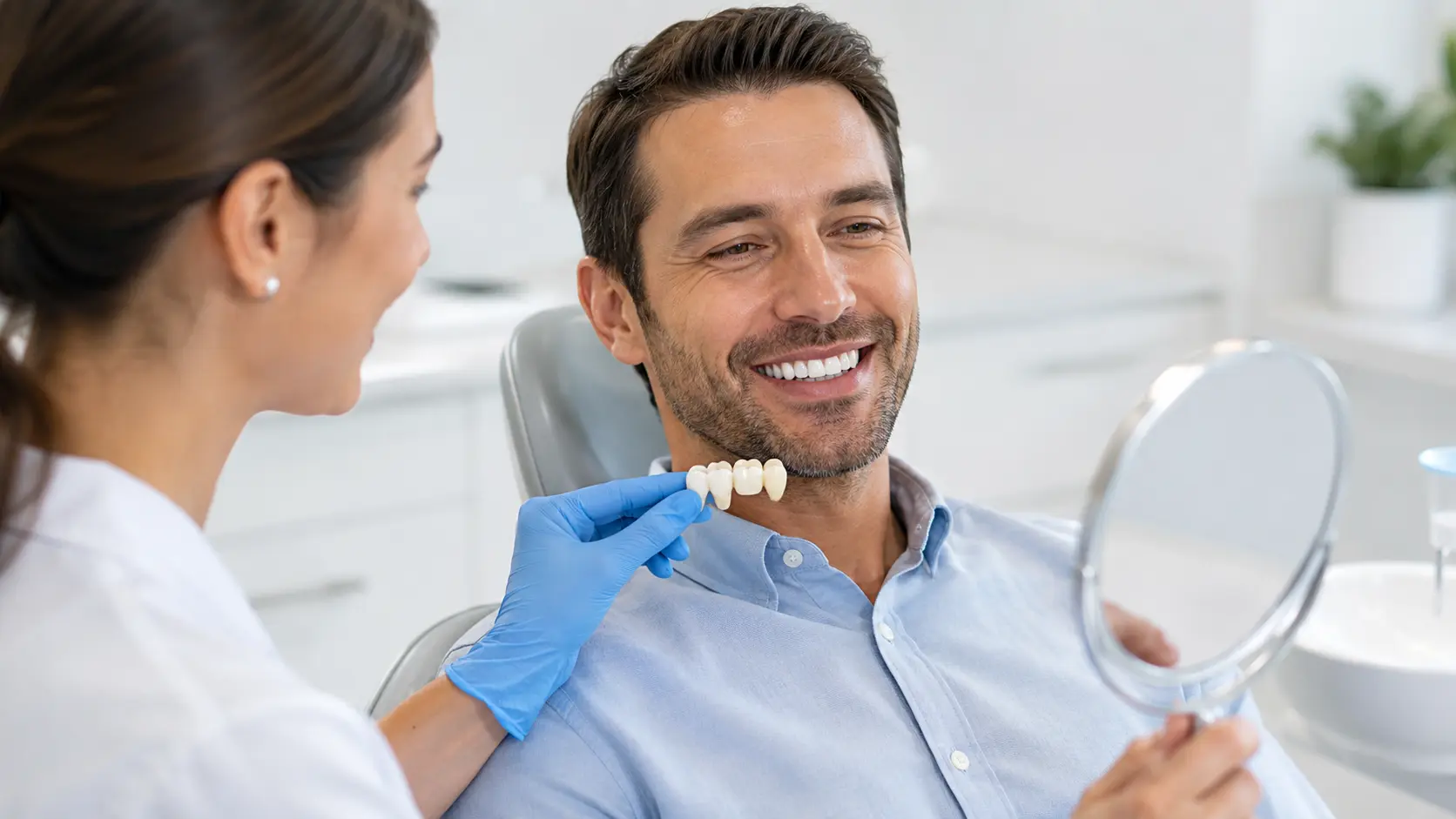
Missing teeth can affect much more than the appearance of your smile. An empty space can make it more difficult to chew certain foods, change the way you speak, and allow nearby teeth to gradually move out of position.
At Florida Smiles Dental, we provide custom dental bridges in Fort Lauderdale, FL, to replace missing teeth and restore a more complete, comfortable, and natural-looking smile. Our dental team will carefully evaluate your teeth, gums, bite, and personal goals before recommending the restorative treatment that best fits your needs.
Whether you are missing a single tooth or several teeth in the same area, a dental bridge may provide a stable and convenient solution. Contact Florida Smiles Dental to schedule a consultation and learn more about your tooth replacement options.
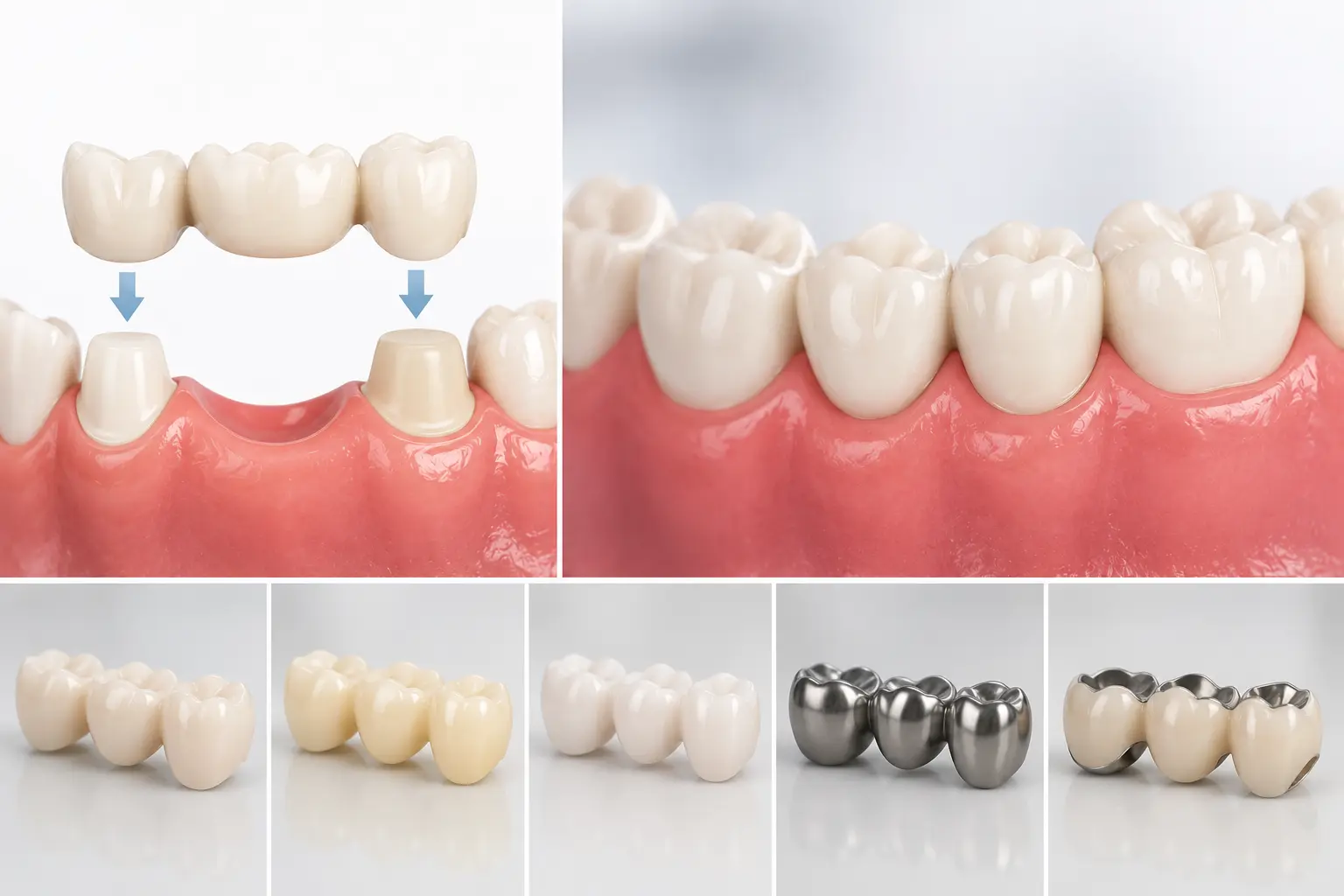
A dental bridge is a fixed restoration designed to fill the space left by one or more missing teeth. The replacement tooth, known as a pontic, sits in the empty space and is supported by natural teeth, dental crowns, dental implants, or a combination of these structures.
Unlike a removable partial denture, a fixed dental bridge remains in your mouth and can only be removed by a dental professional. Each bridge is customized to complement the shape, color, and proportions of the surrounding teeth.
Dental bridges can be made from materials such as porcelain, ceramic, zirconia, metal alloys, or a combination of materials. The right material will depend on the location of the missing tooth, the amount of chewing pressure in that area, your cosmetic preferences, and the condition of the supporting teeth.
Some patients become accustomed to living with a missing tooth, especially when the space is not visible while smiling. However, leaving an empty space untreated may affect the alignment and function of the rest of your mouth.
The teeth next to the gap may begin to shift or tilt into the empty space. The opposing tooth may also move because it no longer has another tooth to bite against. These changes can interfere with your bite and make cleaning between the teeth more difficult.
Replacing a missing tooth with a dental bridge can help:
The sooner you discuss a missing tooth with your dentist, the sooner you can understand your available options and prevent additional changes to your bite.
During the dental exam, this is your opportunity to talk to your dentist and ask questions you may have about your dental health. Do you need toothbrush recommendations or have questions about the discomfort you’ve been experiencing? This is the perfect time to ask. Your dentist can even provide a tutorial to show you how to brush your teeth and floss.
You may be a candidate for a dental bridge if you are missing one tooth or several consecutive teeth and want a fixed replacement option.
For a traditional bridge, the natural teeth located next to the space must usually be strong enough to support dental crowns. Your gums should also be healthy, and any active tooth decay or periodontal disease may need to be treated before the bridge is placed.
A dental bridge may be recommended when:
Every patient’s situation is different. During your consultation, our dental team will examine your mouth and explain whether a bridge, dental implant, partial denture, or another restorative treatment may be most appropriate.
There are several types of dental bridges. The best option depends on the number and location of your missing teeth, the health of the neighboring teeth, your bite, and the amount of support available.
A traditional bridge is one of the most commonly used options. It consists of a replacement tooth or teeth positioned between dental crowns.
The crowns are placed over the natural teeth on both sides of the gap. These teeth act as anchors and hold the bridge securely in position.
Traditional bridges are often considered when a patient has healthy, stable teeth on both sides of the missing tooth. Because the supporting teeth must be reshaped to accommodate crowns, the procedure permanently changes those teeth.
A cantilever bridge is supported by a dental crown on only one side of the missing tooth. This option may be considered when there is only one suitable supporting tooth next to the empty space.
Because the bridge receives support from one side, it may not be appropriate for areas exposed to significant chewing pressure. Our dentist will carefully evaluate the location of the gap and your bite before recommending this type of restoration.
A Maryland bridge, sometimes called a resin-bonded bridge, is typically held in place by small wings bonded to the backs of neighboring teeth.
This design requires less alteration of the supporting teeth than a traditional bridge and may be considered for replacing certain front teeth. However, it is not usually strong enough for areas that experience heavy biting and chewing forces.
An implant-supported bridge is anchored to dental implants rather than natural teeth. This type of bridge may be recommended when several consecutive teeth are missing.
The implants act as artificial tooth roots and provide a stable foundation for the restoration. Since the bridge is supported by implants, the neighboring natural teeth do not have to be reshaped for crowns.
Implant-supported bridges require a surgical procedure and a healing period before the final restoration can be placed. Our dental team can evaluate your bone structure, oral health, and medical history to determine whether dental implants are an appropriate option.
The exact process will depend on the type of bridge you receive. Traditional dental bridges are commonly completed over multiple appointments.
Your treatment begins with a comprehensive examination. Our dentist will evaluate the missing-tooth area, the neighboring teeth, your gums, and your bite.
Digital X-rays or other diagnostic images may be taken to examine the roots of the supporting teeth and the surrounding bone. We will also discuss your concerns, preferred appearance, treatment options, estimated timeline, and financial considerations.
For a traditional bridge, the teeth on both sides of the gap are reshaped so dental crowns can fit over them. Local anesthesia is used to keep you comfortable during this process.
After the teeth have been prepared, impressions or digital scans are taken. These records are used to design a bridge that fits your mouth and works properly with your bite.
A temporary bridge may be placed while the final restoration is being created. The temporary bridge helps protect the prepared teeth, maintains the space, and allows you to eat and smile more comfortably.
Temporary restorations are not as strong as permanent bridges. You may be asked to avoid hard, sticky, or chewy foods until the final bridge is ready.
At your next appointment, the temporary restoration is removed and the final dental bridge is carefully evaluated. Our dentist will check its shape, color, fit, and contact with the opposing teeth.
Minor adjustments may be made to improve comfort and ensure that your bite feels balanced. Once the fit is confirmed, the bridge is secured in place using dental cement.
Dental bridges provide cosmetic and functional benefits for patients who have lost teeth.
A customized dental bridge can:
A properly designed bridge should blend with the surrounding teeth and feel comfortable once your mouth has adjusted to the restoration.
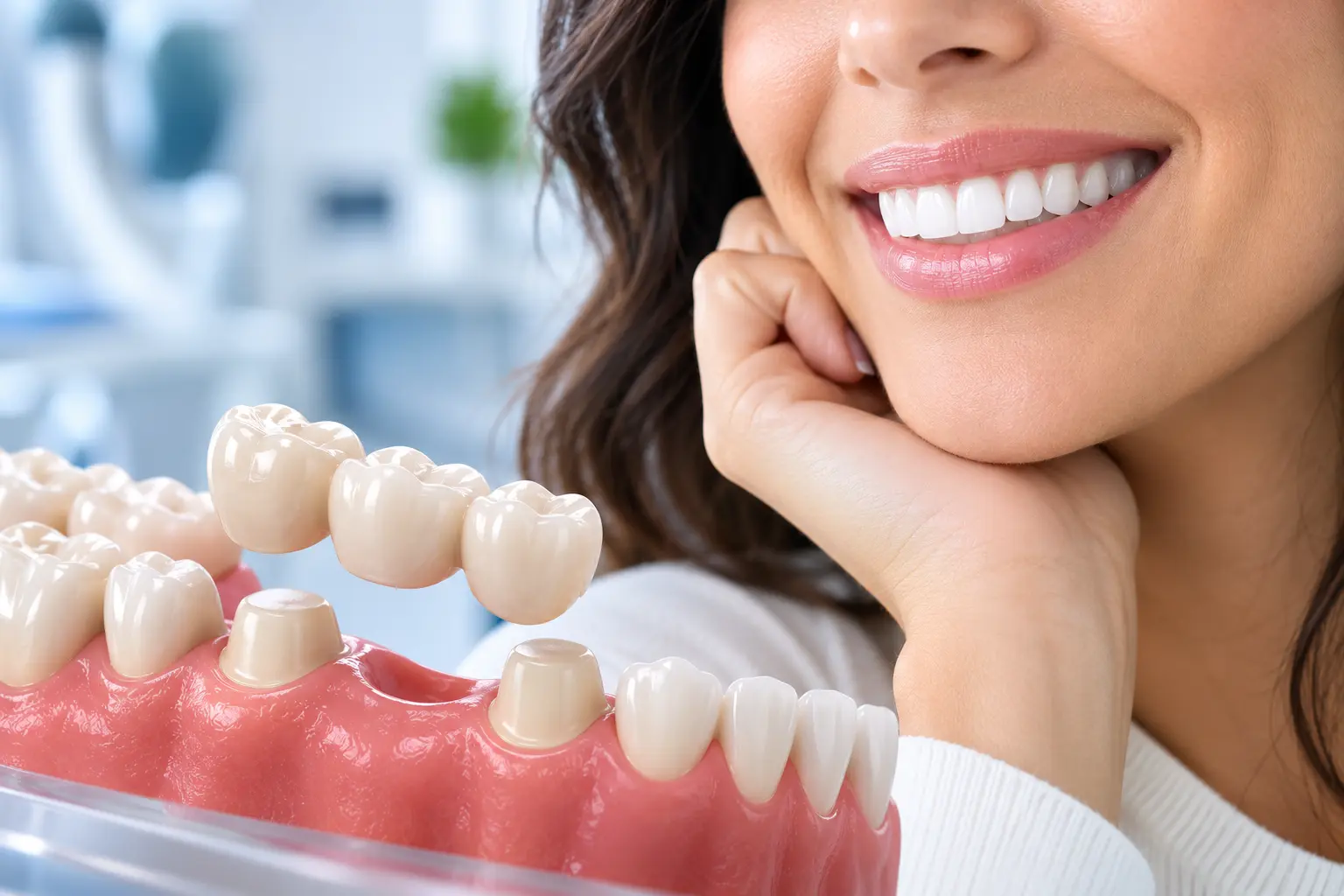
Dental bridges and dental implants can both replace missing teeth, but they use different methods of support.
A traditional bridge relies on crowned natural teeth on both sides of the space. Treatment can often be completed without oral surgery, but the supporting teeth must be reshaped.
A dental implant replaces the missing tooth root with a small post placed in the jawbone. A crown is then attached to the implant. Implants do not require reshaping neighboring teeth, but treatment generally involves surgery and a longer healing process.
Factors that may influence your decision include:
Neither option is automatically right for every patient. Our dentist will explain the advantages and limitations of each treatment so you can make an informed decision.
Contact your dentist if you notice changes in an existing dental bridge. Early evaluation may help prevent further damage to the bridge or its supporting teeth.
Schedule an appointment if:
Do not attempt to repair or recement a loose dental bridge at home. A dentist must examine the restoration and determine why it became loose.