
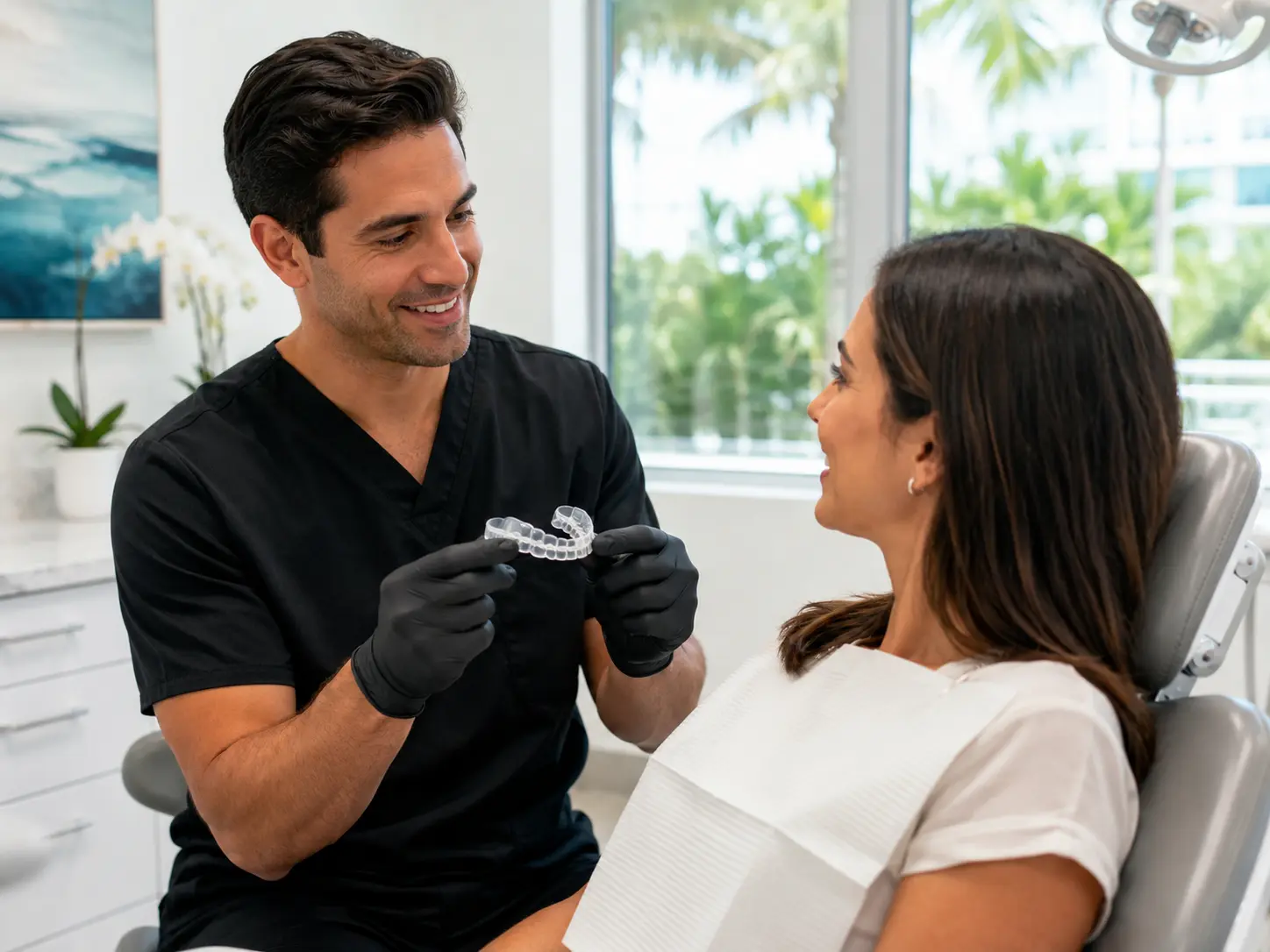
Your teeth are strong, but they are not indestructible. A sudden impact during sports or repeated grinding and clenching at night can gradually damage your teeth, dental restorations, gums, and jaw.
Florida Smiles Dental provides custom mouth guards for patients in Fort Lauderdale and Lighthouse Point, FL. Each appliance is designed according to the shape of your teeth, your bite, and the specific type of protection you need.
We offer custom athletic mouth guards to help protect your smile during sports and recreational activities, as well as night guards designed to reduce damage caused by teeth grinding and clenching.
Contact Florida Smiles Dental to schedule an evaluation and determine which type of dental guard is appropriate for you or your child.
A mouth guard is a removable oral appliance worn over the teeth to help protect them from injury, excessive pressure, or repeated contact.
Although the terms mouth guard and night guard are sometimes used interchangeably, these appliances are designed for different purposes.
An athletic mouth guard is intended to absorb and distribute forces that may affect the teeth, lips, cheeks, and gums during sports or recreational activities.
A night guard, also called an occlusal guard, bite guard, or dental splint, is usually worn while sleeping. It creates a protective barrier between the upper and lower teeth to reduce damage associated with grinding or clenching.
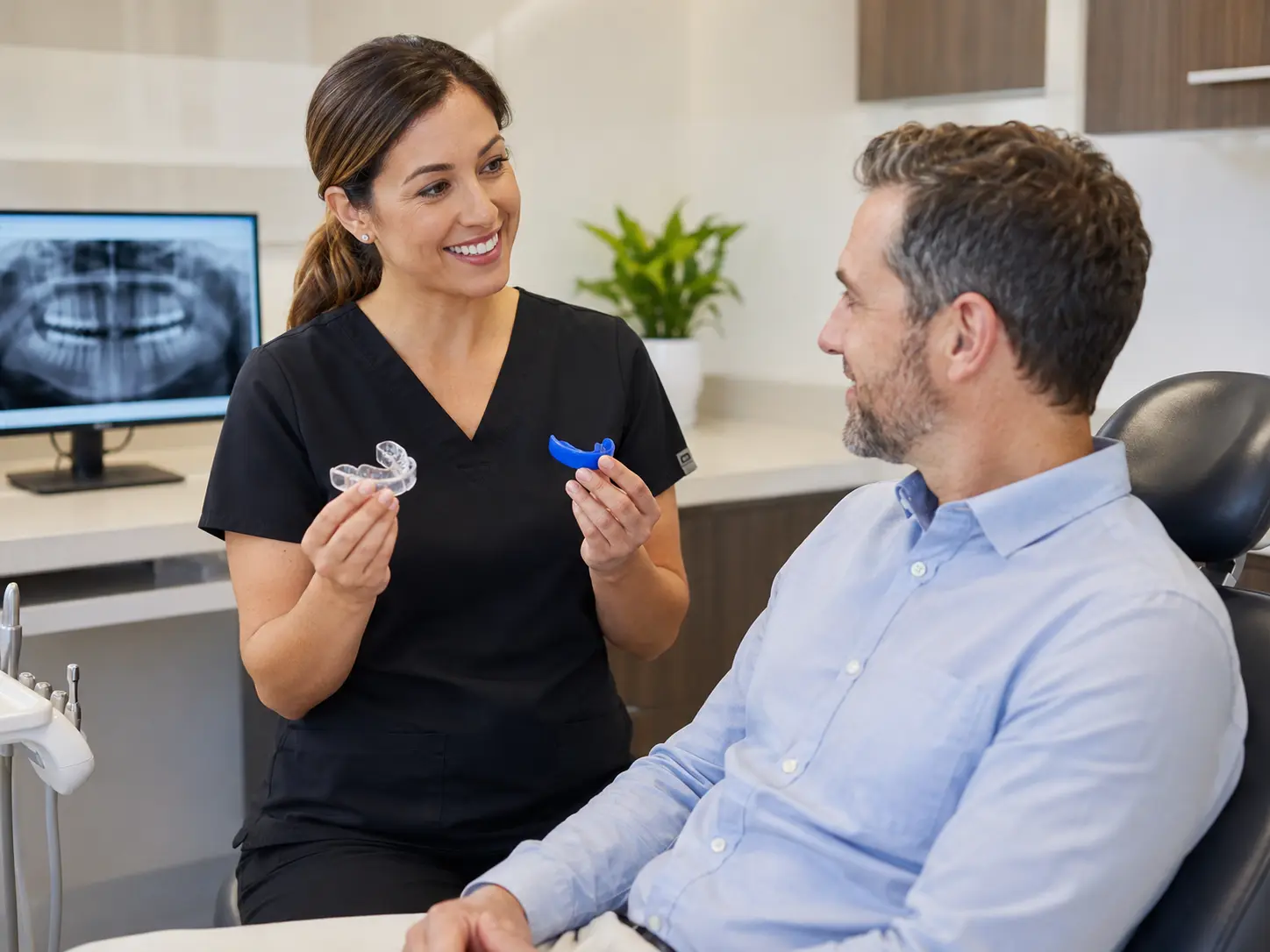
Both appliances should fit securely and comfortably without requiring you to clench your teeth to keep them in place.
Florida Smiles Dental can evaluate your teeth and recommend an appliance based on your oral health, activities, symptoms, and treatment goals.
Athletic mouth guards help protect the teeth and soft tissues during activities where falls, collisions, flying objects, or accidental contact may occur.
A sports guard can help reduce the risk and severity of injuries such as:
A mouth guard cannot eliminate every possibility of injury. However, wearing a properly fitted appliance provides an important layer of protection during higher-risk activities.
A night guard is designed for patients who grind, clench, or place excessive pressure on their teeth.
The appliance separates the upper and lower teeth and provides a durable surface that receives the force instead of allowing the natural teeth to repeatedly contact one another.
A night guard may help protect against:
A night guard protects the teeth from the effects of bruxism, but it may not stop the underlying grinding habit. Additional evaluation may be needed to identify contributing factors.
Bruxism is the involuntary grinding, clenching, or gnashing of the teeth. It may occur while a person is awake or asleep.
Many patients are unaware that they grind their teeth because nighttime bruxism happens unconsciously. A spouse or family member may notice the sound, or a dentist may identify characteristic wear during a routine examination.
Repeated pressure from grinding and clenching can place considerable stress on the teeth, restorations, jaw muscles, and temporomandibular joints.
Bruxism may be associated with several factors, including:
Because bruxism may have more than one contributing factor, treatment should be based on a professional dental evaluation.
Teeth grinding does not always cause immediate pain. In some cases, damage develops gradually over several months or years.
Signs of grinding or clenching may include:
These symptoms may have causes other than bruxism. An examination is necessary to determine whether a night guard is appropriate.
A night guard creates a physical barrier between the upper and lower teeth. Instead of the enamel surfaces or dental restorations grinding directly against each other, the appliance receives and distributes the contact.
Depending on its design, a custom night guard may help:
A night guard is a protective device, not a permanent cure for bruxism. Your dentist may also discuss stress management, sleep habits, medication considerations, restorative treatment, or evaluation by another healthcare professional when appropriate.
A sports mouth guard may be recommended for children, teenagers, and adults who participate in activities that involve physical contact, falls, projectiles, or high-speed movement.
Mouth guards are commonly used for:
A sport does not have to be classified as a contact sport for a dental injury to occur. An accidental fall, collision, elbow, ball, or piece of equipment can damage the mouth.
Athletes should wear their mouth guards during practices as well as games because injuries can occur in either setting.
Children and teenagers may benefit from mouth guards when participating in school, club, or recreational sports.
A growing child’s mouth changes as permanent teeth erupt and the jaws develop. For this reason, the fit of a young athlete’s mouth guard should be checked regularly.
A replacement may be necessary when:
Parents should inspect the appliance regularly and encourage their child to rinse and clean it after every use.
Patients with braces can still participate in sports, but they require appropriate protection.
An impact to the mouth can damage brackets and wires or press orthodontic hardware into the lips and cheeks. A mouth guard designed to fit around braces can provide space for the orthodontic appliances while helping protect the teeth and soft tissues.
The guard may need additional room to accommodate tooth movement during orthodontic treatment.
Do not attempt to mold an appliance around braces without professional guidance. An improperly fitted guard may become stuck, interfere with treatment, or fail to provide appropriate protection.
Our dental team can coordinate recommendations with your orthodontic treatment when needed.
Mouth guards are available in custom, boil-and-bite, and preformed stock designs.
A custom mouth guard is made from a detailed impression or digital scan of your teeth.
Potential advantages include:
Because the appliance is made specifically for your mouth, it should stay in place without requiring constant biting or clenching.
Boil-and-bite guards are softened in hot water and shaped around the teeth.
They generally provide a better fit than a stock appliance, but the result depends on correct molding. The material may become thin or uneven during the fitting process, and the appliance may need to be replaced more frequently.

Stock mouth guards are sold in predetermined sizes and are ready to wear.
They are usually the least expensive option, but they may feel bulky, move during use, or make breathing and communication more difficult. Because the fit is not individualized, the level of protection may be limited.
A mouth guard can only provide useful protection when it fits correctly.
A properly fitted appliance should:
An appliance that is uncomfortable is less likely to be worn consistently. A loose guard may also move during use and fail to protect the intended areas.
Although athletic guards and night guards both cover the teeth, their materials, thicknesses, and designs serve different purposes.
A sports mouth guard is designed to cushion sudden impact. It is generally made from a more flexible and shock-absorbing material.
A night guard is designed to withstand repeated grinding and clenching forces. Depending on the patient, it may be made from a hard material, a softer material, or a combination of materials.
Using a sports guard as a night guard may not provide the correct bite relationship or durability. Similarly, a night guard may not provide the cushioning and coverage required during athletic activity.
Use each appliance only for the purpose recommended by your dentist.
Receiving a custom mouth guard is a straightforward process, but a dental evaluation should take place before the appliance is made.
Our dentist will examine your teeth, gums, bite, and existing dental work.
For a night guard, we may also look for:
For an athletic guard, we will consider your sport, age, orthodontic treatment, dental restorations, and level of activity.
A detailed impression or digital scan is taken to reproduce the shape and position of your teeth.
This record allows the appliance to be fabricated specifically for your mouth rather than relying on a generic size.
The guard is designed according to its purpose.
Important design factors may include:
Once the appliance is ready, our dental team will check its fit and comfort.
We will evaluate whether it remains securely in place and make adjustments when necessary. You will also receive instructions for wearing, cleaning, storing, and monitoring the appliance.
An athletic mouth guard should be worn whenever you participate in the activity for which it was recommended, including practices, training sessions, and games.
A night guard is generally worn while sleeping. Consistent use provides better protection than wearing it only occasionally.
The exact wearing schedule depends on your diagnosis and treatment plan. Some patients may receive different instructions based on their symptoms, dental work, or daytime clenching habits.
A new night guard may feel unfamiliar during the first several nights.
You may initially notice:
These sensations often improve as you become accustomed to wearing the appliance.
The guard should not cause sharp pain, significant gum irritation, or persistent changes in your bite. Contact Florida Smiles Dental if the appliance feels uncomfortable or does not stay securely in place.
Mouth guards collect saliva, plaque, and bacteria and should be cleaned after each use.
General cleaning instructions include:
Avoid hot or boiling water because heat can distort the material and alter the fit.
Do not use bleach, abrasive toothpaste, alcohol-based products, or harsh household cleaners unless your dentist specifically recommends them for your appliance.
Keep your mouth guard in its protective case when it is not being worn.
A proper storage case helps protect it from:
Do not leave the appliance inside a hot vehicle or near a heater. Excessive heat may cause it to warp.
Young athletes should label the case with their name and contact information, especially when carrying the appliance to school, practices, or competitions.
The lifespan of a mouth guard depends on the material, frequency of use, amount of grinding, age of the patient, and how well the appliance is maintained.
Schedule an evaluation if:
A damaged or poorly fitting guard may no longer provide adequate protection.
A custom night guard may help protect restorations such as crowns, veneers, bridges, bonding, and fillings from excessive grinding or clenching forces.
However, the appliance must be designed around the existing dental work. A poorly fitting guard can place unwanted pressure on restorations or become difficult to remove.
Tell our dental team if you have:
If you receive significant dental work after your guard is made, the appliance may need to be adjusted or replaced.
Grinding and clenching may contribute to jaw muscle fatigue, facial discomfort, morning headaches, or stress around the temporomandibular joints.
A custom night guard may help some patients by reducing direct tooth contact and redistributing pressure. However, jaw pain has many possible causes, and an appliance is not appropriate for every condition.
A comprehensive evaluation is important before beginning treatment. Depending on your symptoms, additional care may be recommended.