

Small imperfections can have a significant effect on how you feel about your smile. Discoloration, chips, uneven edges, gaps, or teeth with irregular shapes may cause you to hide your smile in photographs, social situations, or professional settings.
At Florida Smiles Dental, we provide custom dental veneers in Fort Lauderdale, FL, to help patients create more balanced, natural-looking smiles. Veneers are thin restorations placed over the front surfaces of selected teeth to improve their color, size, shape, proportion, and overall appearance.
Every smile is different, which is why veneer treatment begins with a personalized cosmetic consultation. Our dental team will examine your teeth and gums, discuss the changes you would like to make, and determine whether veneers or another cosmetic treatment is most appropriate.
Contact Florida Smiles Dental to schedule your veneer consultation and discover what may be possible for your smile.
Dental veneers are thin, custom-made restorations designed to cover the visible front surfaces of teeth. They are commonly used to conceal cosmetic imperfections and create a brighter, more symmetrical smile.
Unlike a dental crown, which surrounds most or all of the visible tooth, a veneer primarily covers the front surface. This generally allows the dentist to preserve more natural tooth structure when the tooth is healthy enough for cosmetic treatment.
Veneers are individually designed to complement your facial features, smile line, gumline, and surrounding teeth. Their color, length, width, contour, and translucency can be customized to create results that look attractive without appearing unnatural or overly uniform.
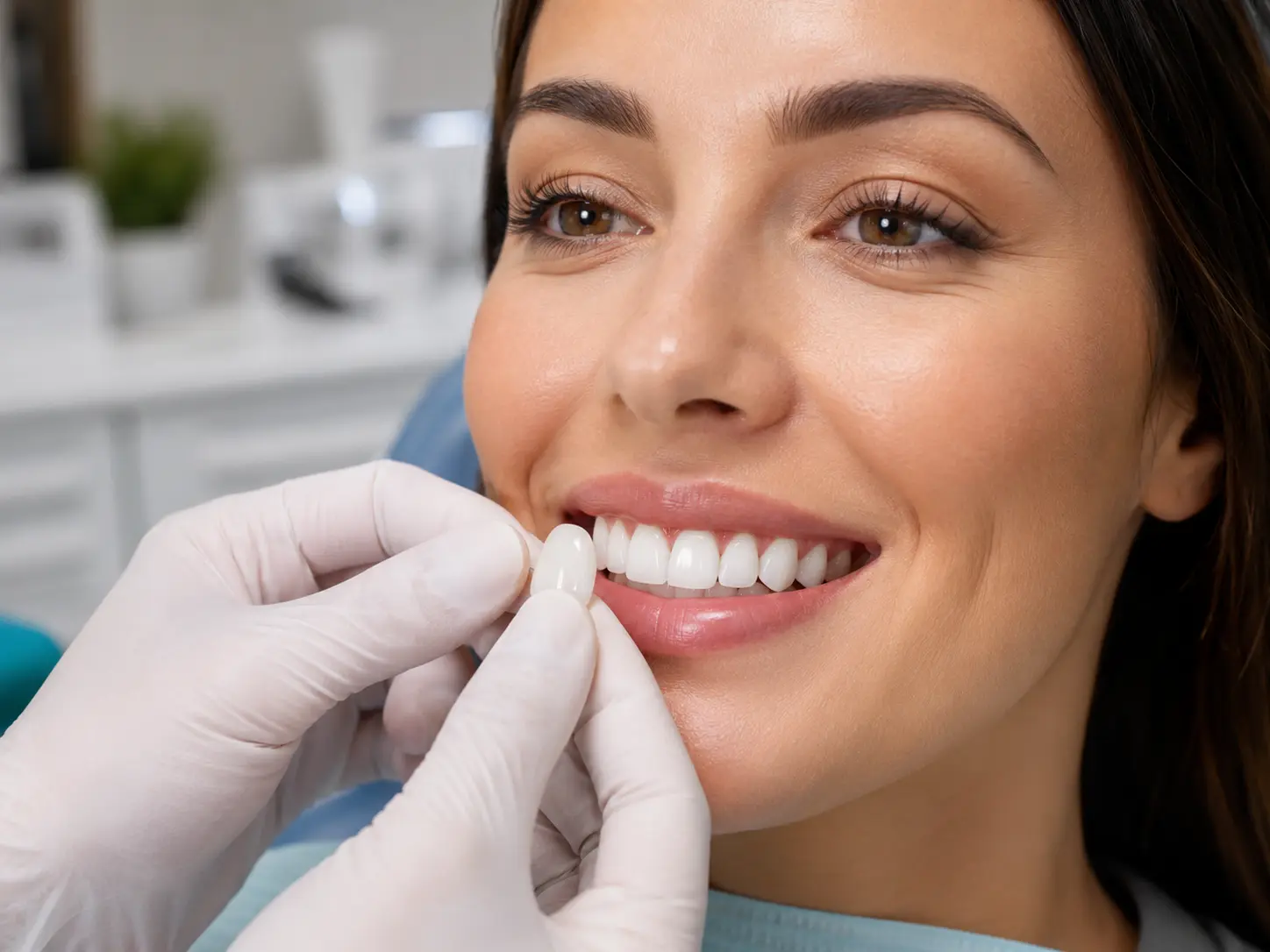
Depending on the treatment plan, veneers may be made from porcelain, ceramic, or tooth-colored composite resin.
Veneers can improve several cosmetic concerns at the same time, making them a versatile option for patients interested in changing multiple aspects of their smiles.
Dental veneers may be used to improve the appearance of:
Veneers are primarily cosmetic restorations. They cannot correct every structural, bite-related, or orthodontic concern.
A severely damaged tooth may require a dental crown, while significant crowding or misalignment may be better treated with Invisalign or traditional orthodontics. Our dental team will help you compare the available options before treatment begins.
You may be a candidate for veneers if you have healthy teeth and gums but want to improve the appearance of visible cosmetic imperfections.
Good candidates generally have:
Before recommending veneers, our dentist will examine the condition of each tooth and the surrounding gum tissue. Any active cavities, infections, or gum disease should be treated first.
Your bite must also be evaluated. If you grind or clench your teeth, veneers may experience excessive pressure and become more vulnerable to chipping or fracture. A custom nightguard may be recommended to help protect the restorations.
Veneers are not appropriate for every patient or every tooth. Our goal is not simply to place veneers, but to recommend a treatment that protects your oral health and produces stable, natural-looking results.
Another treatment may be more suitable if you have:
For example, professional teeth whitening may be sufficient for patients whose primary concern is staining. Dental bonding may be appropriate for a small chip or isolated gap. Invisalign may provide a healthier long-term solution for significant alignment concerns.
During your consultation, we will explain whether veneers are appropriate and discuss any alternatives that may better fit your needs.
Porcelain veneers are custom-made shells created to fit over the front surfaces of selected teeth. Porcelain is commonly chosen because it can closely reproduce the color, translucency, and light-reflecting qualities of natural enamel.
Porcelain veneers can be customized to create subtle improvements or a more comprehensive smile transformation. The goal is not to give every patient the same smile, but to create proportions that complement the individual.
Benefits associated with porcelain veneers may include:
Porcelain veneer treatment usually requires more than one appointment because the restorations are individually designed and fabricated before final placement.
Composite veneers are created using tooth-colored resin material. The material is applied and shaped directly on the tooth or prepared outside the mouth before being bonded in position.
Composite treatment may require less tooth preparation than traditional porcelain veneers in certain cases. It can also sometimes be completed in fewer visits.
Potential benefits of composite veneers include:
Composite resin is generally more susceptible to staining, wear, and chipping than porcelain. It may also require more frequent maintenance or replacement.
The best material depends on your teeth, cosmetic goals, bite, budget, and expectations for longevity.
Your initial consultation is an important part of the treatment process. It gives you an opportunity to explain what you like about your smile, what you would like to change, and what type of result feels natural to you.
During the consultation, our dental team may evaluate:
Digital X-rays or other diagnostic records may be taken when necessary to evaluate the health and structure of the teeth.
We will also discuss the number of teeth that may need treatment. Some patients want to improve one or two teeth, while others are interested in treating several visible teeth to create greater consistency across the smile.
Successful veneer treatment involves more than selecting a bright shade of white. Each restoration must be designed in relation to the rest of your smile.
When planning veneers, we consider:
Some patients prefer a polished, dramatic result, while others want people to notice an improved smile without immediately recognizing that they have received cosmetic dental treatment.
Clear communication during the planning stage allows us to develop a result that reflects your individual preferences.
The exact treatment process depends on the type of veneer, the number of teeth being treated, and the condition of your smile.
Before beginning cosmetic treatment, our dentist will confirm that your teeth and gums are healthy enough for veneers.
If cavities, gum inflammation, or other dental concerns are found, these issues may need to be addressed before veneer preparation begins.
We will discuss the proposed tooth shapes, color, number of veneers, expected timeline, alternative treatments, and care requirements.
Traditional porcelain veneers usually require the removal of a small amount of enamel from the front surfaces of the teeth. This creates room for the restorations and helps prevent the final teeth from appearing thick or bulky.
Local anesthesia may be used to help keep you comfortable during tooth preparation.
The amount of enamel removed depends on your existing tooth shape, tooth position, chosen material, and desired result. Because enamel may be permanently altered, traditional veneer treatment is generally considered irreversible.
After the teeth have been prepared, detailed impressions or digital scans are taken.
These records capture the shape of the prepared teeth, neighboring teeth, and bite. They are used to create veneers that fit securely and align comfortably with the rest of your mouth.
Temporary veneers may be placed while the final restorations are being created. These temporaries protect the prepared teeth and provide a preview of the approximate size and shape of your new smile.
Temporary veneers are not as strong or stain-resistant as the final restorations. You may be asked to avoid hard, sticky, or chewy foods during this stage.
Once the final veneers are ready, the temporary restorations are removed. Each veneer is carefully positioned and evaluated before permanent bonding.
Our dentist will examine:
After the veneers are approved, the teeth are prepared for bonding. Dental adhesive and specialized cement are used to secure the restorations.
The veneers are then polished, and your bite is checked again. Minor adjustments may be made to improve comfort and balance.
There is no standard number of veneers that every patient needs.
One veneer may be appropriate when a single tooth has a cosmetic imperfection. However, treating only one visible tooth requires careful color and shape matching so the restoration blends naturally with the surrounding teeth.
Patients seeking a broader smile transformation may choose veneers for several teeth that show when smiling. The recommended number depends on:
Our dentist will help you choose a treatment plan that improves your smile without recommending unnecessary dental work.
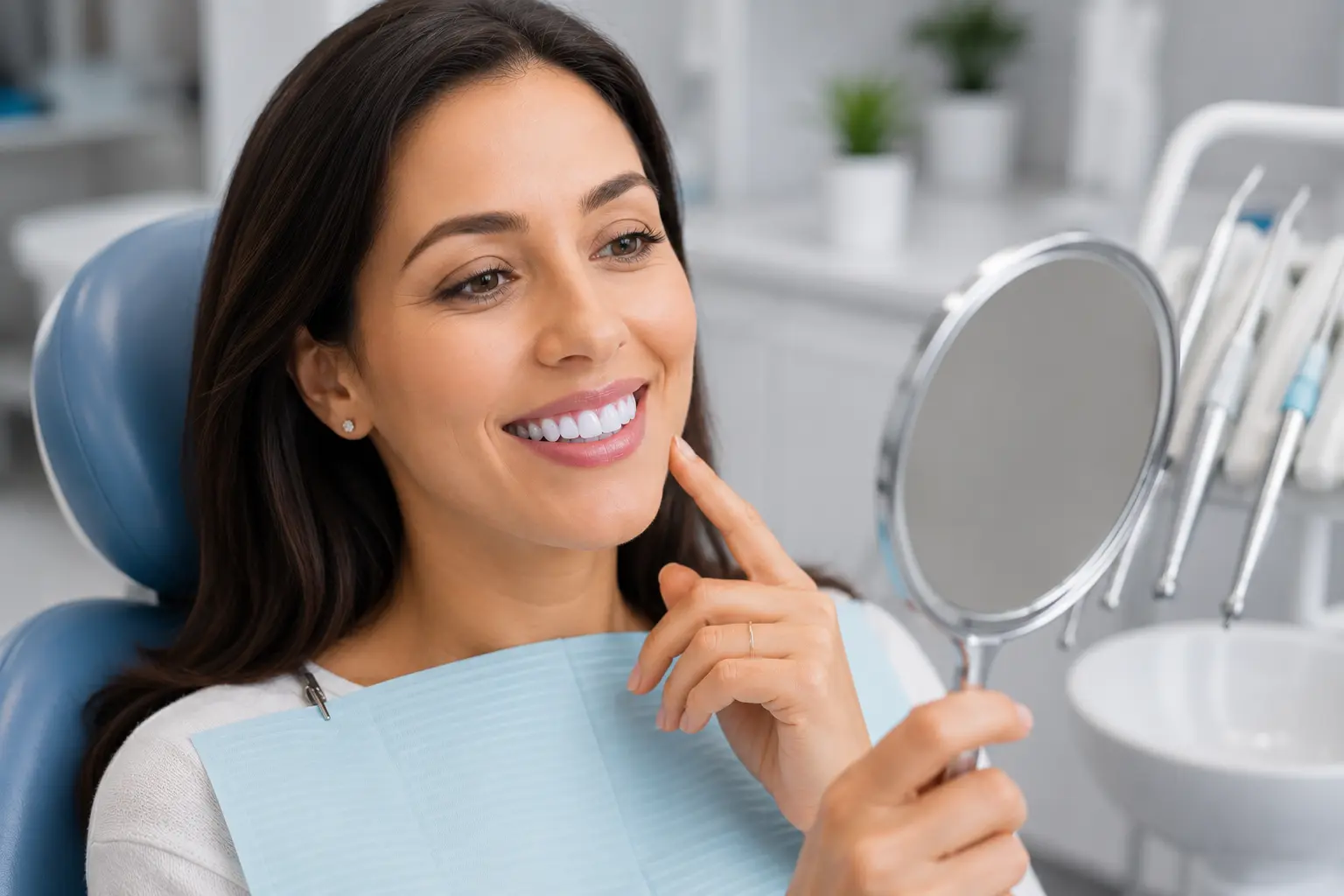
Dental veneers can provide several cosmetic advantages for carefully selected patients.
Potential benefits include:
The outcome depends on the original condition of your teeth, the selected material, the treatment plan, and your long-term care.
Well-designed veneers should complement your smile rather than appear artificial.
A natural-looking result requires careful attention to color, translucency, shape, surface texture, and proportion. Natural teeth are not perfectly flat, opaque, or identical, so cosmetic restorations should include the subtle characteristics that allow them to blend with the smile.
Our treatment planning process considers:
The shade does not always need to be the brightest available option. A color that works with your skin tone, facial features, and surrounding teeth may produce a more balanced result.
Veneers and dental bonding can both improve chips, gaps, discoloration, and irregular tooth shapes.
Dental bonding uses tooth-colored composite resin that is shaped directly on the tooth. It is generally more conservative and may be appropriate for small or isolated imperfections.
Bonding can often be completed in one appointment, but the material may stain, wear, or chip more easily than porcelain.
Porcelain veneers are custom-fabricated restorations that typically provide greater stain resistance and longer-lasting cosmetic stability. However, they usually require a larger financial commitment and permanent alteration of the treated teeth.
Bonding may be appropriate for a minor correction, while veneers may be more suitable when several aspects of the smile need to be changed.
A veneer covers primarily the front surface of a tooth. A dental crown surrounds most or all of the visible portion of the tooth.
Veneers are generally used for cosmetic improvement when the underlying tooth is healthy and structurally stable.
Crowns are commonly recommended when a tooth has:
Although crowns can also improve appearance, their primary purpose is often to protect and restore a weakened tooth.
Our dentist will recommend the most conservative option capable of producing a stable result.
Professional teeth whitening is designed to lighten natural tooth enamel. It may be an excellent option for generalized yellowing or staining when the teeth are otherwise healthy and attractive in shape.
However, whitening cannot change:
Veneers can change both the color and physical appearance of the treated teeth.
Patients planning to combine whitening with veneers are often advised to complete whitening first. The veneers can then be matched to the newly selected tooth shade.
Veneers can sometimes create the appearance of straighter teeth when irregularities are minor. However, they do not actually move the teeth or correct the underlying bite.
Invisalign treatment gradually changes the physical positions of the teeth. It may be more appropriate for patients with:
Some patients complete orthodontic treatment first and then use whitening, bonding, or veneers to refine tooth shape and color.
Our dental team can explain whether cosmetic treatment, orthodontic treatment, or a combination of procedures is most appropriate.
Dental veneers are long-lasting restorations, but they are not permanent and may eventually require repair or replacement.
Their lifespan depends on:
Porcelain generally provides greater resistance to stains and wear than composite resin. However, either material can become damaged when exposed to excessive pressure.
The natural teeth underneath and around the veneers remain susceptible to decay and gum disease. Consistent preventive care is therefore essential.
Veneers do not require a complicated maintenance routine, but they must be cleaned and protected consistently.
To care for your veneers:
Although porcelain is resistant to staining, the surrounding natural teeth may still change color over time. Maintaining consistent habits helps keep your entire smile looking balanced.
After permanent veneers are placed, most patients can enjoy a normal diet. However, veneers can chip or fracture when exposed to excessive force.
Use caution with:
Hard foods do not necessarily need to be eliminated completely, but cutting them into smaller pieces and chewing with the back teeth can reduce pressure on the veneers.
The veneer material itself cannot develop tooth decay. However, the natural tooth underneath and around the restoration can still develop a cavity.
Decay may form near the edges of a veneer if plaque accumulates or oral hygiene is inadequate.
Brushing, flossing, professional cleanings, fluoride use, and regular examinations help protect the underlying tooth structure.
If extensive decay develops beneath a veneer, the restoration may need to be removed or replaced so the tooth can be treated.
Whitening treatments do not significantly change the color of porcelain, ceramic, or composite restorations.
For this reason, patients who want a brighter overall smile may benefit from whitening their natural teeth before the veneers are created. The veneer shade can then be selected to coordinate with the whitened teeth.
If your existing veneers no longer match your preferred tooth color, replacement may be necessary to create a different shade.
Contact Florida Smiles Dental if you notice changes in one of your veneers.
A dental evaluation is recommended if:
Do not attempt to reattach a veneer with household glue. Keep any detached restoration in a safe container and contact our office for professional evaluation.
Cosmetic dental treatment should be personalized, carefully planned, and built around the health of your natural teeth.
At Florida Smiles Dental, we combine cosmetic planning with comprehensive dental care to help patients make informed decisions about their smiles.
We begin by listening to what you want to improve. Your treatment plan is developed around your concerns, preferences, oral health, and facial characteristics.
We carefully consider tooth proportions, color, translucency, gum contours, and your smile line. Our goal is to improve your smile while maintaining an appearance that complements you.
We evaluate whether veneers are truly the most appropriate option. When whitening, bonding, orthodontics, or another treatment would better preserve your natural teeth, we will explain those alternatives.
Digital imaging and modern diagnostic technology help us evaluate your oral health, plan treatment, and create detailed records of your teeth and bite.
Florida Smiles Dental provides cosmetic, general, restorative, periodontal, orthodontic, implant, and endodontic care. Any dental health concerns identified before cosmetic treatment can be coordinated within a comprehensive plan.
We explain the procedure, benefits, limitations, costs, maintenance requirements, and alternative options before treatment begins.