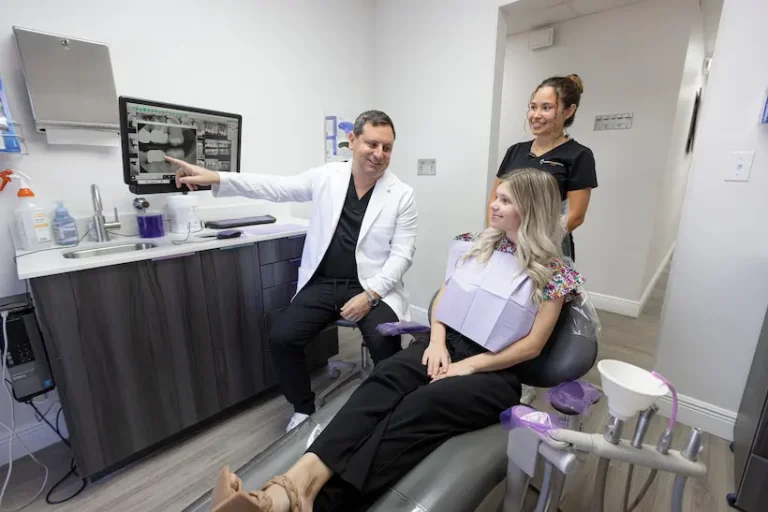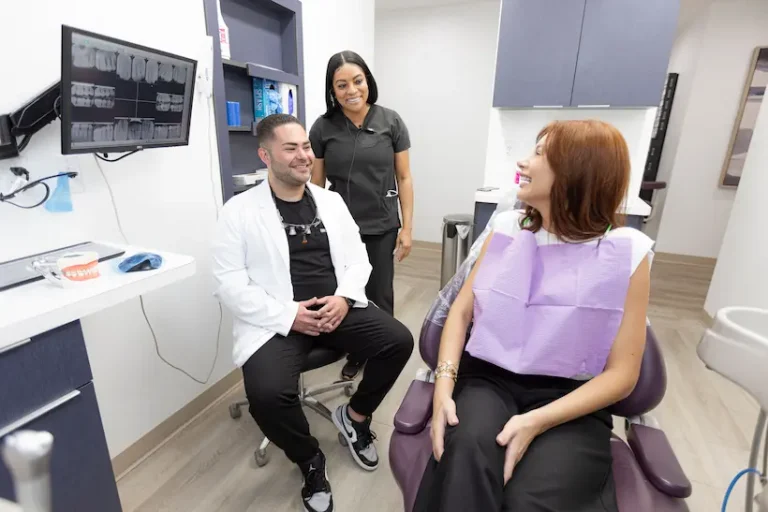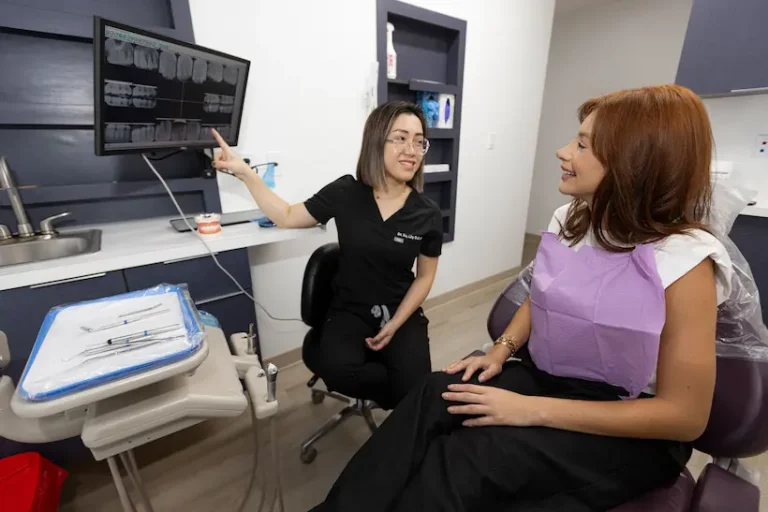
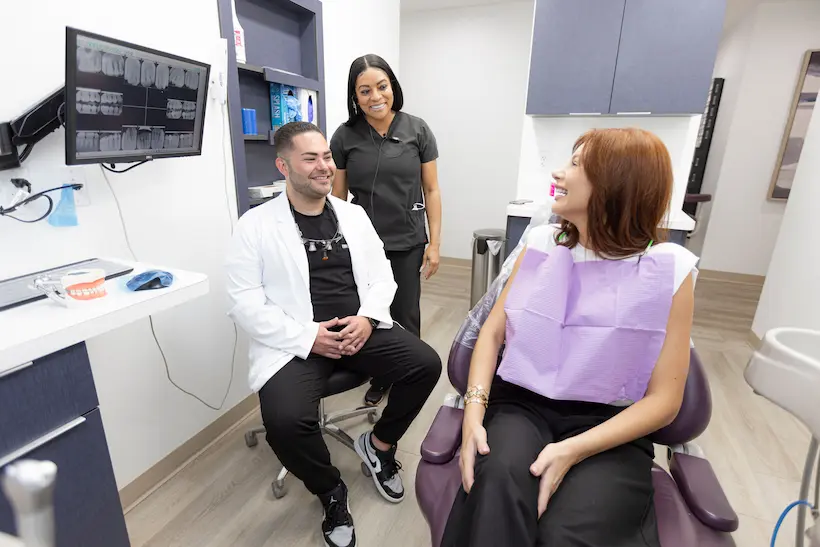
Missing a tooth can affect much more than the appearance of your smile. Over time, missing or severely damaged teeth can influence how you eat, speak, and bite, as well as the health of the surrounding teeth and jawbone.
For many patients,
dental implants provide a long-term option for replacing missing teeth
with a restoration designed to look and function much like a natural tooth.
At Florida Smiles Dental, we help patients at our
Fort Lauderdale
and
Lighthouse Point
locations
explore their tooth replacement options and determine whether dental implants may be an appropriate solution.
So, when should you start the conversation?
Here are five signs it may be time to consider dental implants.
1. You’re Missing One or More Teeth
The most obvious reason to consider a dental implant is a missing tooth, but replacing that tooth isn’t only about appearance.
After a tooth is lost, neighboring teeth may gradually shift toward the open space. Changes can also occur in the jawbone because the area no longer receives stimulation from the natural tooth root.
A dental implant is placed in the jawbone to serve as a foundation for a replacement tooth. Depending on your needs, implants can be used to replace a single tooth or as part of a larger restoration.
Even if you’ve lived with a missing tooth for years, it may still be worth exploring your options.
2. You Have a Tooth That Can No Longer Be Saved
Whenever possible, the goal is to preserve your natural teeth.
Sometimes, however, severe decay, infection, fractures, or other structural damage can make saving a tooth difficult or unpredictable.
If a tooth needs to be removed, discussing
how it will eventually be replaced
is an important part of treatment planning.
Depending on your individual situation, a dental implant may be one option.
Planning ahead also allows your dentist to evaluate your gums, available bone, bite, and overall oral health before deciding on the appropriate next step.
3. Your Current Denture or Bridge Isn’t Working for You
Traditional dentures and bridges can be excellent tooth replacement solutions, and implants aren’t automatically better for every patient.
But if you’re unhappy with the comfort, stability, or function of your current restoration, it may be worth asking about alternatives.
You may be experiencing:
- Movement or instability while eating
- Difficulty chewing certain foods
- Changes in the fit of a denture
- Discomfort
- Frustration with a removable appliance
- Concerns about the appearance of your smile
Dental implants can be used in different ways depending on how many teeth are missing and the type of restoration needed.
An evaluation can help determine which approach makes the most sense for you.
4. Missing Teeth Are Changing the Way You Eat or Smile
Sometimes we adapt to dental problems so gradually that we barely notice we’re doing it.
Maybe you’ve started chewing exclusively on one side.
Maybe you’ve stopped eating certain foods.
Or perhaps you’ve become less comfortable smiling in photos or speaking without thinking about your teeth.
Replacing missing teeth isn’t purely cosmetic. Restoring your ability to comfortably chew, speak, and smile can make a meaningful difference in everyday life.
Dental implants provide a stable foundation for replacement teeth, which is one reason many patients choose to explore them.
5. You Want a Long-Term Tooth Replacement Option
There are several ways to replace missing teeth, and the best option depends on the individual patient.
One advantage of dental implants is that they’re designed to integrate with the jawbone and provide a stable foundation for the restoration placed above them.
With appropriate treatment planning, good oral hygiene, routine dental visits, and proper maintenance, implants can provide a long-term tooth replacement solution for many patients.
The key is determining whether
you’re a good candidate for dental implants.
Your dentist will evaluate factors such as your gums, bone, bite, medical history, and overall oral health before recommending treatment.
What If My Tooth Has Been Missing for Years?
Don’t automatically assume you’ve waited too long.
Patients sometimes believe they can’t have an implant because their tooth has been missing for several years.
While changes in the jawbone can occur after tooth loss, that doesn’t necessarily mean implant treatment is no longer possible.
A dental evaluation and appropriate imaging can help determine how much bone is available and whether additional treatment may be recommended before implant placement.
The best way to know what is possible is to have the area evaluated.
How Much Do Dental Implants Cost?
Cost is understandably one of the biggest questions patients have about dental implants.
The total cost depends on your individual treatment needs, including the number of teeth being replaced, the condition of the surrounding gums and bone, and the type of restoration required.
Florida Smiles Dental also offers
financing options
for qualifying patients, with
dental implant options starting at $299 per month.*
Rather than assuming implant treatment is outside your budget, a consultation can help you understand both your clinical options and the financing options that may be available.
*Financing subject to approval. Monthly payment and treatment costs vary based on individual treatment needs and financing terms. Contact Florida Smiles Dental for details.
Looking for Dental Implants in South Florida?
If you’re dealing with a missing tooth, a failing tooth, or a restoration that no longer feels right, you don’t need to decide on treatment before seeing a dentist.
Start by finding out what’s possible.
Florida Smiles Dental serves patients from
Fort Lauderdale
,
Lighthouse Point
,
and surrounding South Florida communities
,
with two convenient locations where our team can evaluate your smile and discuss your tooth replacement options.
Ready to Explore Your Options?
Schedule a dental implant consultation at the Florida Smiles Dental location most convenient for you.