Professional Teeth Whitening vs Store-Bought Whitening: 7 Key Differences You Need to Know

A Brighter Smile Starts with the Right Whitening Choice

If you’ve ever looked in the mirror and wished your teeth were a little brighter, you’re not alone. Teeth whitening remains one of the most popular cosmetic dental treatments because it offers a simple way to enhance your smile and boost confidence. Living in South Florida often means enjoying coffee on the go, iced beverages, social gatherings, weddings, vacations, and countless opportunities for photos. Over time, these everyday habits can contribute to tooth discoloration, leaving many people searching for effective whitening solutions. When considering ways to brighten your smile, one of the most common questions is whether professional teeth whitening is truly better than store-bought whitening products. While over-the-counter whitening strips, gels, and kits may seem convenient, professional treatments offer several advantages that many patients don’t fully understand until they experience the results themselves. At Florida Smiles Dental, patients frequently ask about the differences between these two options. Understanding how each treatment works can help you make an informed decision that aligns with your goals, budget, and expectations.

Why Teeth Become Discolored Over Time

Before comparing whitening methods, it’s important to understand why teeth lose their brightness. Tooth discoloration can occur for several reasons, including:

  • Coffee and tea consumption
  • Red wine
  • Tobacco use
  • Dark-colored foods
  • Aging
  • Certain medications
  • Poor oral hygiene
  • Enamel wear

As enamel gradually thins over time, the naturally yellow dentin underneath becomes more visible. Surface stains can also accumulate, causing teeth to appear dull or discolored. Because discoloration can develop from multiple causes, not every whitening treatment works the same way for every patient.

What Is Store-Bought Teeth Whitening?

Store-bought whitening products are widely available at pharmacies, supermarkets, and online retailers. These products typically contain lower concentrations of whitening agents than professional treatments. Common over-the-counter whitening products include:

  • Whitening strips
  • Whitening toothpaste
  • Whitening mouthwash
  • Whitening pens
  • LED whitening kits
  • Whitening gels and trays

Many people choose these products because they are easy to purchase and relatively affordable. However, convenience does not always translate into optimal results.

How Store-Bought Whitening Products Work

Most over-the-counter whitening products use peroxide-based ingredients to help remove surface stains from teeth. The whitening process works by:

  1. Breaking down stain molecules.
  2. Lightening discoloration.
  3. Gradually improving tooth shade.

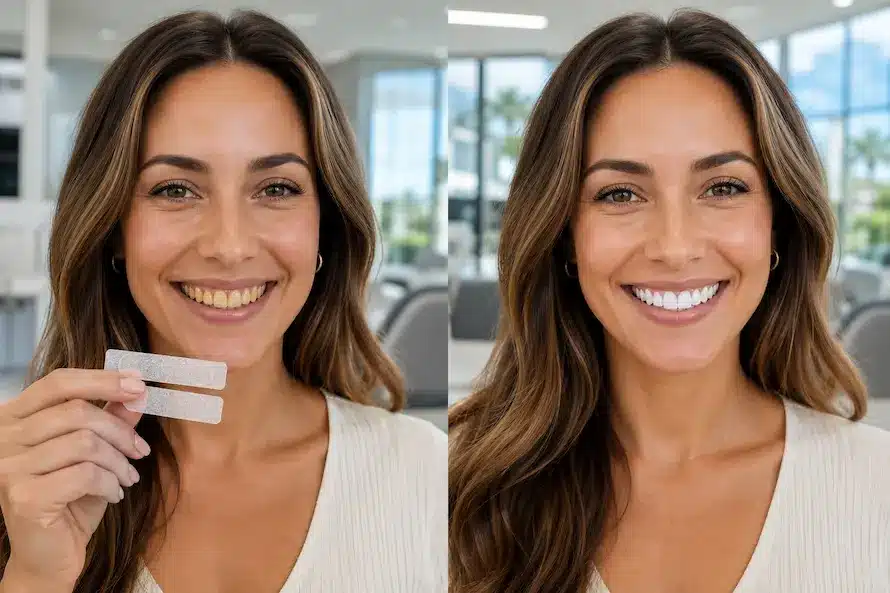
Because the whitening ingredients are typically less concentrated, users often need multiple applications over several weeks before noticing significant changes. Results can vary greatly depending on the product used and the type of staining present.

Limitations of Store-Bought Whitening Solutions

While some patients experience mild improvements, over-the-counter whitening products have several limitations.

One-Size-Fits-All Approach

Store-bought whitening trays and strips are designed for the general population. They are not customized to your specific smile. This can lead to:

  • Uneven whitening
  • Missed areas
  • Gum irritation
  • Inconsistent results

Lower Whitening Strength

Many over-the-counter products contain lower concentrations of active whitening ingredients. As a result:

  • Treatment takes longer.
  • Results may be less dramatic.
  • Deep stains may not respond effectively.

Limited Professional Guidance

Without a dental evaluation, it’s difficult to determine whether discoloration is caused by:

  • Surface stains
  • Internal tooth discoloration
  • Existing dental restorations
  • Medication-related staining

Patients may spend considerable time and money on products that are not suited to their specific needs.

Limited Professional Guidance

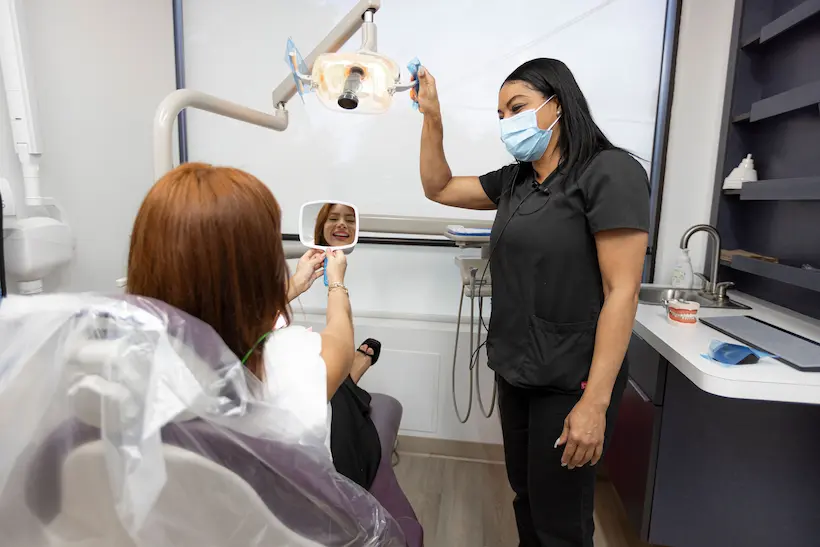
Professional teeth whitening is a cosmetic dental treatment performed or supervised by dental professionals. Unlike store-bought products, professional whitening treatments are customized to each patient’s unique smile and oral health needs. At Florida Smiles Dental, professional whitening begins with an examination to identify the cause of discoloration and determine the most effective treatment approach. This personalized assessment helps ensure optimal results while minimizing potential side effects.

How Professional Teeth Whitening Works

Professional whitening treatments use stronger whitening agents that can penetrate stains more effectively. The process generally includes:

Comprehensive Dental Evaluation

A dentist evaluates:

  • Tooth color
  • Existing restorations
  • Oral health
  • Sensitivity concerns
  • Causes of discoloration

Customized Treatment Planning

Every smile is different. Treatment plans are tailored to address individual goals and concerns.

Controlled Whitening Application

Professional whitening products are carefully applied to maximize effectiveness while protecting surrounding tissues. This controlled environment allows for safer and more predictable outcomes.

Professional Teeth Whitening vs Store-Bought Whitening: Side-by-Side Comparison

FeatureProfessional WhiteningStore-Bought Whitening
Whitening StrengthHigherLower
Speed of ResultsFasterSlower
CustomizationFully CustomizedOne-Size-Fits-All
Professional OversightYesNo
Sensitivity ManagementBetter ControlledLess Controlled
Even WhiteningMore ConsistentVariable
Treatment PlanningPersonalizedGeneric
Long-Term ResultsTypically BetterOften Shorter Lasting

Why Some Teeth Don’t Whiten Evenly

Many patients are surprised to learn that not all teeth respond equally to whitening treatments. Several factors can affect results.

Dental Restorations

Whitening products generally do not change the color of:

  • Crowns
  • Veneers
  • Fillings
  • Bonding materials

This can create uneven coloration if restorations are present.

Internal Staining

Some discoloration originates inside the tooth structure rather than on the surface. These deeper stains may require alternative cosmetic treatments rather than traditional whitening.

Age-Related Changes

As teeth age, enamel naturally wears down, which can influence whitening outcomes. Professional guidance helps establish realistic expectations before treatment begins.

Managing Tooth Sensitivity During Whitening

One of the biggest concerns patients have is sensitivity. The truth is that some degree of temporary sensitivity can occur with any whitening treatment. However, professional whitening offers significant advantages. Dental professionals can:

  • Assess sensitivity risks beforehand
  • Recommend appropriate treatment options
  • Adjust whitening protocols as needed
  • Provide guidance for managing discomfort

Many patients who struggled with sensitivity from whitening strips are pleasantly surprised by how comfortable professional whitening can be.

How Long Do Whitening Results Last?

The longevity of whitening results depends on several factors. These include:

  • Oral hygiene habits
  • Diet
  • Tobacco use
  • Coffee and tea consumption
  • Maintenance routines

Generally speaking, professional whitening often provides longer-lasting results because it achieves deeper and more effective stain removal.

Patients can prolong their results by maintaining regular dental cleanings and practicing good oral hygiene.

Who Is a Good Candidate for Professional Whitening?

Professional whitening may be an excellent option for individuals who:

  • Have healthy teeth and gums
  • Want faster results
  • Have an upcoming special event
  • Desire more noticeable whitening
  • Have experienced limited success with store-bought products

A dental consultation can determine whether whitening is appropriate or if alternative cosmetic treatments may provide better results.

Popular Reasons Patients Choose Teeth Whitening

Many people associate whitening with cosmetic improvement, but motivations often go beyond appearance. Patients frequently seek whitening before:

  • Weddings
  • Vacations
  • Graduations
  • Job interviews
  • Professional headshots
  • Reunions
  • Special celebrations

For others, whitening simply represents an investment in self-care and personal confidence. A brighter smile can help people feel more comfortable in social and professional settings.

Common Myths About Teeth Whitening

Myth #1: All Whitening Products Work the Same

Different whitening products vary significantly in strength, effectiveness, and customization.

Myth #2: Whitening Damages Healthy Teeth

When performed properly and under professional supervision, whitening is generally considered safe for healthy teeth.

Myth #3: Results Are Permanent

Whitening is not permanent. Lifestyle habits and aging can gradually lead to new staining.

Myth #4: Everyone Gets the Same Results

Every patient responds differently depending on their enamel, existing stains, and oral health.

Frequently Asked Questions

Is professional teeth whitening worth the extra cost?

For many patients, the faster, more predictable, and more noticeable results make professional whitening a worthwhile investment.

Can whitening remove deep stains?

Some deep stains respond well to professional treatment, while others may require alternative cosmetic procedures.

How quickly will I see results?

Professional whitening typically produces noticeable improvements much faster than store-bought products.

Does whitening hurt?

Most patients experience little to no discomfort, although temporary sensitivity can occur.

Will crowns and veneers whiten too?

No. Existing restorations generally do not respond to whitening agents.

How often should I whiten my teeth?

This varies by individual. Your dentist can recommend a maintenance schedule based on your goals and lifestyle.

Are Dental Implants Worth It? A Dentist’s Honest Guide to Cost, Benefits, and Long-Term Value

For many people, losing a tooth affects far more than just their smile. It changes how they eat. How they speak. How they smile in photos. Sometimes even how they carry themselves socially, professionally, and emotionally. That’s why dental implants can be life-changing for the right patient. At Florida Smiles Dental, dental implants are one of the most common restorative consultations we see across our Fort Lauderdale and Lighthouse Point locations. And one of the first questions patients usually ask is simple:

“Are dental implants really worth it?”

In many cases, the answer is yes. Dental implants are often worth it because they replace missing teeth in a way that looks natural, feels stable, helps preserve jawbone structure, and can last for many years with proper care. They are not the cheapest tooth replacement option upfront, and they are not right for everyone, but for patients who want a long-term solution, implants can be one of the best investments in oral health and quality of life. At Florida Smiles Dental, the team offers dental implants in both Fort Lauderdale and Lighthouse Point, and their dental technology page highlights tools such as digital X-rays, 3D imaging, intraoral cameras, and Cone Beam CT scanning, which are especially relevant for implant planning.

So, Are Dental Implants Worth It?

Yes, dental implants are usually worth it for patients who want a stable, natural-looking, long-term solution for missing teeth. But the real answer depends on your mouth, your health, your goals, and your budget. A dental implant is not just a cosmetic upgrade. It is a replacement for the missing tooth root. Once placed into the jawbone, the implant can support a crown, bridge, or denture. That makes it different from removable dentures or traditional bridges, which replace the visible part of the tooth but do not replace the root. For many patients, the biggest value comes from the way implants feel in everyday life. Eating feels more secure. Speaking feels more natural. Smiling feels less stressful. And because the implant is anchored in the jaw, it can help support the surrounding bone and bite over time. At Florida Smiles Dental, we look at implants as a long-term decision, not a quick cosmetic fix. During an implant consultation, the goal is not simply to ask, “Can we place an implant?” The better question is, “Is this the right option for your health, your lifestyle, and your smile goals?” Dental implants may be worth it if you:

  • are missing one or more teeth
  • want a fixed option instead of something removable
  • are frustrated with loose dentures
  • want to chew more comfortably
  • want to avoid altering healthy neighboring teeth
  • have enough bone support or are open to grafting
  • and want a long-term replacement option

They may not be the best first choice if you have untreated gum disease, uncontrolled medical conditions, severe bone loss, or if you are looking for the lowest-cost short-term solution. That’s why a consultation matters. The best treatment plan is always the one that fits your mouth, your goals, your timeline, and your comfort level.

What Makes Dental Implants Different?

Unlike removable options, dental implants are designed to function similarly to natural teeth. A dental implant usually has three main parts: the implant post, the abutment, and the final restoration. The implant post is typically made from titanium or ceramic and is placed into the jawbone. Over time, the surrounding bone heals around the implant in a process called osseointegration. This is what gives the implant its stability. The abutment connects the implant post to the visible restoration. The crown, bridge, or denture is the part people see when you smile. This final restoration is custom-designed to blend with your natural teeth and restore function. That structure is one reason implants feel different from many other tooth replacement options. A removable denture sits on top of the gums. A traditional bridge uses neighboring teeth for support. A dental implant, on the other hand, is anchored in the jawbone. That difference matters. When a tooth root is missing, the jawbone in that area no longer receives the same stimulation it once did from chewing. Over time, this can contribute to bone loss. Dental implants help address this because they replace the root structure, not just the visible tooth. For patients, that can mean better chewing strength, improved stability, and a smile that feels more natural. At Florida Smiles Dental, implant planning may involve digital imaging and 3D diagnostic tools to evaluate the bone, gums, bite, and surrounding teeth before treatment begins. Cone Beam CT scans, for example, create a 3D view of teeth, gums, nerves, and bone structure, which can be helpful for surgical planning.

Why Patients Choose Dental Implants

Every patient has different goals, but many people explore implants for the same core reasons. They want to smile more confidently. They want to chew comfortably again. They are tired of removable dentures. They want to avoid teeth shifting into an empty space. They want to preserve jawbone structure. They want something that feels more permanent. And honestly, the emotional side matters just as much as the functional side. We regularly meet patients who say they stopped smiling in photos, avoided certain foods, or covered their mouth when laughing. Missing teeth can make people feel older than they are, less confident at work, or uncomfortable in social situations. Dental implants can help change that. The goal is not just to “fill a gap.” The goal is to restore the way your smile functions and feels in daily life. Some of the biggest benefits of dental implants include:

They Look and Feel Close to Natural Teeth

A well-planned implant restoration is designed to match the shape, color, and size of nearby teeth. Once healed and restored, many patients find that their implant feels like part of their own smile.

They Help Restore Chewing Confidence

Missing teeth can make it harder to eat comfortably, especially foods like steak, apples, salads, nuts, or crusty bread. Dentures may shift. Bridges may feel different. Implants are fixed in place, which can make chewing feel more secure.

They Help Protect the Jawbone

Because implants replace the root of a missing tooth, they help stimulate the jawbone during chewing. This is one of the main reasons implants are often considered a strong long-term solution.

They Do Not Depend on Neighboring Teeth

A traditional dental bridge usually requires reshaping the teeth on both sides of the missing tooth. An implant can often replace the missing tooth without altering healthy adjacent teeth.

They Can Last for Many Years

With proper care, dental implants can last many years, and often decades. The crown or restoration may eventually need replacement, but the implant post itself is designed as a long-term foundation.

The Downsides of Dental Implants

Dental implants offer major benefits, but they are not perfect for every patient. The first downside is cost. Implants typically cost more upfront than dentures or bridges. That can make them feel like a bigger investment at the beginning. However, cost should be viewed in context. Dentures may need adjustments or replacement. Bridges may eventually need repair or replacement. Missing teeth that are left untreated may lead to bite changes, shifting teeth, bone loss, or additional restorative needs. So while implants may cost more at first, they can offer strong long-term value for the right patient. The second downside is time. Dental implants are not usually completed in one quick visit. The process may involve consultation, imaging, extraction, bone grafting, implant placement, healing, and final restoration. Depending on your situation, treatment can take several months. The third downside is that implants require surgery. This is often what makes patients nervous. But many patients are surprised to learn that implant treatment is often more comfortable than they expected. At Florida Smiles Dental, patient comfort and communication are major priorities throughout the process. The clinical team takes time to explain each phase carefully so patients understand what to expect before treatment begins. The fourth downside is candidacy. Not everyone is ready for implants immediately. Healthy gums, enough jawbone support, good oral hygiene, and stable overall health all play a role. Some patients may need gum treatment, bone grafting, extractions, or bite evaluation before implant placement. That does not mean implants are impossible. It simply means the foundation needs to be right.

Dental Implants vs Dentures

Dentures can be a practical option, especially for patients missing many teeth. They are removable and can restore appearance and basic function. But some patients struggle with dentures because they can move, rub, click, or feel less secure while eating and speaking. Even well-made dentures may not feel like natural teeth. Implants can solve many of these problems. A single implant can replace one tooth. Multiple implants can support bridges or implant-supported dentures. For patients frustrated with loose dentures, implant-supported options can feel much more stable.

Dental Implants vs Bridges

A dental bridge can be a good option when the teeth next to the gap already need crowns or support. But if the neighboring teeth are healthy, an implant may be preferable because it does not require those teeth to be reshaped. An implant replaces the missing tooth independently.

Which Option Gives the Best Long-Term Value?

For many patients, implants offer the strongest long-term value because they are stable, durable, and help support bone health. But the best option depends on your mouth. That is why we do not believe every patient should receive the same recommendation. At Florida Smiles Dental, the right choice starts with a full evaluation of your gums, bone, bite, health history, and goals.

Who Is a Good Candidate for Dental Implants?

A good dental implant candidate usually has healthy gums, enough jawbone support, and good overall health. You may be a strong candidate if you:

  • are missing one or more teeth
  • have healthy gums
  • have adequate jawbone density
  • do not smoke or are willing to stop
  • maintain good oral hygiene
  • want a fixed long-term solution
  • and are comfortable with a treatment process that takes time

Bone density is especially important because the implant needs a stable foundation. If there is not enough bone, bone grafting may be recommended before or during implant treatment. Gum health also matters. If gum disease is present, it should usually be treated before implant placement. Healthy gums help support long-term implant success. Overall health is another factor. Conditions such as uncontrolled diabetes, immune system concerns, or certain medications may affect healing. This does not always rule out implants, but it does mean your dentist needs to evaluate your case carefully. Lifestyle matters, too. Heavy smoking or vaping can increase implant risks because it may affect healing and gum health. This is why the consultation is so important. Some patients are excellent candidates immediately. Others simply need preliminary care first. Either way, the goal is to create a plan that gives the implant the best chance of long-term success.

Are Dental Implants Painful?

This is one of the biggest misconceptions about implants. Many patients expect the procedure to be extremely painful. In reality, many are surprised by how manageable the experience is. During the implant procedure, the area is numbed so you should not feel sharp pain. You may feel pressure or vibration, but the goal is to keep you comfortable throughout treatment. After the procedure, some soreness, swelling, or tenderness is normal. For many patients, recovery feels similar to or easier than a tooth extraction. Discomfort is usually temporary and can often be managed with post-operative instructions and recommended medication. At Florida Smiles Dental, communication is a major part of patient comfort. Our team explains each phase carefully so you know what is happening, what to expect afterward, and when to call if something does not feel right. The unknown is often scarier than the procedure itself. That is why we encourage patients to ask questions during the consultation. If you are nervous about pain, healing, sedation options, or recovery time, bring those concerns up early. A good implant experience starts with feeling informed and prepared.

How Long Do Dental Implants Last?

With proper care, dental implants can last many years and often decades. That is one reason they are frequently considered a long-term investment in both oral health and quality of life. However, it helps to understand that an implant has different parts. The implant post is the part placed into the jawbone. The restoration is the crown, bridge, or denture attached to it. The implant post can last a very long time when it is properly placed and maintained. The crown or restoration may need to be replaced sooner because it experiences daily chewing forces, just like a natural tooth or dental crown. To help your implant last longer, you should:

  • brush and floss consistently
  • keep up with regular dental visits
  • avoid smoking
  • protect your implant if you grind your teeth
  • treat gum inflammation early
  • and follow your dentist’s maintenance recommendations

Dental implants are not “set it and forget it.” They still need preventive care. Our hygiene team works closely with implant patients to help protect their long-term results. That ongoing maintenance is a major part of keeping implants healthy for years.

How Much Do Dental Implants Cost?

Dental implant cost varies because no two cases are exactly the same. The total cost can depend on:

  • how many teeth are missing
  • whether extraction is needed
  • whether bone grafting is needed
  • the type of implant restoration
  • whether you need one implant or multiple implants
  • your gum and bone health
  • and the complexity of the case

A single implant with a crown is different from an implant-supported bridge. Full-mouth implant treatment is different from replacing one missing molar. A patient with strong bone support may have a simpler plan than a patient who needs grafting first.

This is why it is hard to give an accurate price without an exam.

Are dental implants worth the cost? For many patients, yes especially when they want a fixed, long-term solution that supports function, appearance, and confidence.

Still, the financial side matters. During a consultation, it is fair to ask what is included, what additional procedures may be needed, whether insurance may help, and what payment options are available.

The goal is not to pressure you into the most expensive option. The goal is to help you understand the difference between short-term cost and long-term value.

More Than Cosmetic: Why Replacing Missing Teeth Matters

Dental implants absolutely improve appearance, but they are not just cosmetic. Missing teeth can affect jaw health, facial structure, bite function, and long-term stability. When a tooth is missing, nearby teeth may begin to shift into the empty space. Opposing teeth may also move because they no longer have the same biting contact. Over time, this can affect your bite and create additional wear on surrounding teeth. Bone loss is another concern. Without a tooth root, the jawbone in that area can shrink over time. This may affect facial support and make future restorative treatment more complicated. Chewing is also important. When patients avoid one side of the mouth or stop eating certain foods, it can affect nutrition and comfort. That is why replacing missing teeth earlier often helps prevent larger restorative issues later. For many patients, the value of implants is not only that they restore a smile. It is that they help restore normal function, protect the bite, and support better long-term oral health. And sometimes, restoring a smile restores much more than people expect.

Are Dental Implants Worth It for Patients in Fort Lauderdale and Lighthouse Point?

If you are in Fort Lauderdale, Lighthouse Point, or nearby areas, dental implants may be worth considering if you want a stable, long-term solution for missing teeth. At Florida Smiles Dental, our team evaluates dental implants with a personalized approach. That means looking at your oral health, bone support, gum condition, bite, goals, lifestyle, and comfort level before recommending treatment. Planning matters. A successful implant is not just about placing a post in the bone. It is about choosing the right location, understanding the surrounding anatomy, designing the right restoration, and making sure the final result works with your bite and smile. That is where technology and experience matter. Florida Smiles Dental lists digital X-rays, intraoral cameras, 3D imaging, and Cone Beam CT scanning among its dental technologies, and the practice serves patients in both Fort Lauderdale and Lighthouse Point. Whether you are missing one tooth or exploring full-mouth restoration options, the best next step is a consultation. You can ask questions, review your options, understand the process, and find out whether implants are right for you. The best treatment plan is always the one that fits your goals, health, lifestyle, and comfort level.

Conclusion: Are Dental Implants Worth It?

For many patients, dental implants are absolutely worth it. They can restore chewing comfort, improve confidence, support jawbone health, and provide a long-term replacement for missing teeth. They often feel more stable than dentures and can avoid the need to reshape healthy neighboring teeth like some bridges require. But they are not the right answer for every person automatically. Dental implants require healthy gums, enough bone support, good planning, a healing period, and a higher upfront investment. Some patients may need additional treatment before they are ready. That is why the real answer is personal. If you are missing one tooth, several teeth, or considering full-mouth restoration, the team at Florida Smiles Dental can walk you through your options at our Fort Lauderdale and Lighthouse Point locations. Learn more or schedule an implant consultation:

  • Book an Implant Consultation in Fort Lauderdale
  • Book an Implant Consultation in Lighthouse Point

FAQs About Dental Implants

Are dental implants worth the money?

For many patients, yes. Dental implants are often worth the money because they are stable, natural-looking, long-lasting, and help support jawbone health. They cost more upfront than some alternatives, but they can offer strong long-term value.

What is the biggest downside of dental implants?

The biggest downsides are cost, treatment time, and the need for surgery. Some patients also need bone grafting or gum treatment before implant placement.

Are dental implants better than dentures?

Dental implants are usually more stable than traditional removable dentures. They can make chewing and speaking feel more secure. However, dentures may still be a good option for patients looking for a removable or lower-cost solution.

Are dental implants painful?

Most patients are surprised that implant treatment is more manageable than they expected. The area is numbed during the procedure, and post-treatment soreness is usually temporary.

How long do dental implants last?

With proper care, dental implants can last many years and often decades. The crown or restoration attached to the implant may need replacement over time.

Can dental implants fail?

Yes, dental implants can fail, although they are generally considered a reliable treatment when properly planned and maintained. Gum disease, smoking, poor hygiene, medical conditions, bite problems, or lack of bone support can increase risk.

Who is not a good candidate for dental implants?

Patients with untreated gum disease, uncontrolled medical conditions, heavy smoking habits, severe bone loss, or poor oral hygiene may not be ideal candidates right away. Some may become candidates after preliminary treatment.

Are dental implants worth it for one missing tooth?

Yes, a dental implant can be an excellent option for one missing tooth because it replaces the tooth without relying on neighboring teeth for support.

Do dental implants look natural?

Yes, dental implant restorations are custom-made to blend with nearby teeth. When properly designed, they can look very natural.

What happens if I do not replace a missing tooth?

A missing tooth can lead to shifting teeth, bite changes, bone loss, chewing problems, and additional wear on surrounding teeth. Replacing a missing tooth early may help prevent more complex issues later.

Do You Need Cosmetic Treatments or a Smile Makeover?

Smile makeovers have become a popular service over the years, even if they have a tendency to be confused with cosmetic treatments. Here, we’ll look at the differences between the two, so it’s easier to decide which one is best for you.

What Is a Smile Makeover?

A smile makeover typically refers to a list of treatments that can restore your oral health and appearance. While it doesn’t refer to a specific treatment plan, the idea is for a dentist in Fort Lauderdale, FL to fix any underlying structural issues before undertaking the aesthetic changes you want to make.

A smile makeover might entail:

  • Cleanings: Removing all plaque and tartar from the teeth and gums. This may include a periodontic cleaning, where the dentist will go under the gum line to remove buildup.
  • Restorative dentistry: Implants, bridges, fillings, and crowns are all potential options for a dentist to restore your smile.
  • Orthodontia: A dentist may refer you to an orthodontist who can help you straighten your teeth with either braces or clear aligners.
  • Cosmetic services: Veneers, teeth whitening, gumline contouring, and bondings can cover up any number of flaws in your smile for the perfect finish.

You can think of a smile makeover as a full undertaking if you want to improve your oral health, while cosmetic treatments in Fort Lauderdale, FL focus largely on giving you those movie star whites.

Smile Makeovers in Fort Lauderdale, FL

At Florida Smiles Dental, we offer smile makeovers that can give you the look you’ve always dreamed of. Offering everything from traditional braces to cleanings all under one umbrella, we make it easy to schedule and tick off each service until you’re ready for your close up!

How Long Will My Cosmetic Treatments Last?

Cosmetic treatments are an investment for most people, one that they have to pay for out of pocket. Here, we’ll look at the nature of these treatments and how long you can expect them to last.

The Range of Cosmetic Services

When everyone wants movie-star smiles, cosmetic dental treatments in Lighthouse Point, FL are offered by nearly every dental practice in the country. Unfortunately, the proliferation of these services have also made for a wide range of quality behind each treatment type. For example a composite resin crown veneer might last for four years, while a porcelain veneer could last up to 15 years or more.

Standard Timelines

Standard timelines are somewhat vague, but a dentist in Lighthouse Point, FL will tell you what they give you a good place to start:

  • Teeth whitening: Professional treatments can last anywhere from six months to two years.
  • Dental bonding: Dental bonding can last three to 10 years.
  • Veneers: Veneers can last four to 15 years.
  • Crowns: Crowns can last five to 15 years.

How to Decide

The best investment is one that lasts. As you’ve likely already learned: you’ll either pay now or pay later, so it can help to choose quality today to avoid redoing the work a few years down the road. In addition, you’ll want to work with a team who will share their expertise, giving you real insight into what you can expect and, more importantly, concrete tips on how to best care for your teeth and gums so your treatments last as long as possible.

At Florida Smiles Dental, we can give more information about not just what we offer, but how cosmetic dentistry can help preserve your oral health for many years to come.

What Is a Modern Smile Makeover?

No two people want the same thing from a smile makeover. Our cosmetic dental services in Fort Lauderdale, FL, offer a modern, comprehensive, and personalized approach to getting the smile you want. We create a restorative plan that includes multiple procedures that enhance the appearance of your teeth.

What Is Involved in a Modern Smile Makeover?

The key to making this process “modern” is technology. We use digital technology to create a customized plan. Digital 3D scans, for instance, consider more than just the architecture of your mouth. They show imaging of your facial features, bone structure, and gum line.

The Importance of Alignment

A modern approach also prioritizes alignment in a dental makeover. We may recommend orthodontic treatments first to align your teeth properly. Cosmetic procedures such as veneers and bonding will be more effective if you deal with any alignment issues first.

The Digital Smile Preview

Once your cosmetic dentist in Fort Lauderdale, FL, creates a strategy for your smile makeover, technology allows us to give you a digital preview to ensure your new smile is the one you imagined. That will enable you to see the results of the cosmetic procedures on your teeth before we do them.

A Modern Smile Makeover is Holistic

Our modern makeover will consider not only the visual impact but also how it may affect your oral health. Today, dental professionals have a better understanding of how oral health and overall health relate to one another. Keeping the teeth and gums healthy is a critical step in maintaining your overall health and lasting results from the makeover.

Are You a Good Candidate for a Modern Smile Makeover in Fort Lauderdale, FL?

Contact our office today to set up a consultation with our cosmetic dentist in Fort Lauderdale, FL, to find out if a modern smile makeover is right for you. Call the office or go online to fill out our convenient contact form.