
If you’ve been putting off going to the dentist, you are not alone.
Not even close.
At Florida Smiles Dental, we meet patients every week who haven’t had a dental visit in years. Sometimes it’s because life got busy. Sometimes it’s financial. Sometimes it’s dental anxiety, embarrassment, or a bad experience at another office. And honestly? Most people are much harder on themselves than we ever would be.
The good news is this: no matter how long it has been since your last dental appointment, it is not “too late” to take care of your smile. Your first visit back does not have to be scary, overwhelming, or judgmental. It can simply be the first step toward feeling more comfortable, informed, and in control of your oral health again.
At our Fort Lauderdale and Lighthouse Point dental offices, our goal is not to lecture you about the past. Our goal is to understand where you are today, answer your questions clearly, and help you move forward one step at a time.
First, Take a Breath: You’re Not Alone
Many people feel nervous about going back to the dentist after years away. Some worry they will be judged. Others are afraid of bad news, pain, cost, or needing a lot of dental work. Some patients even feel embarrassed to call because they think they are the only person who has waited this long.
They are not.
Dental care is one of those things that can be easy to postpone. A missed six-month checkup turns into a year. Then two years. Then five. Before long, the idea of scheduling an appointment feels much bigger than the appointment itself.
One thing our front desk and clinical teams often hear from patients in our Fort Lauderdale and Lighthouse Point offices is:
“I don’t know why I waited so long.”
That sentence matters because it shows how often the fear is worse than the visit. Patients may expect criticism, pressure, or embarrassment. Instead, they are often relieved to find a team that listens, explains, and helps them understand their options.
Whether it has been two years, five years, ten years, or longer, your first appointment back is not about shame. It is about getting a clear picture of your oral health and creating a realistic plan.
Why People Put Off Dental Care for Years
Very few people intentionally avoid taking care of themselves. Usually, there is a reason dental care gets pushed aside.
For some patients, work schedules become overwhelming. For others, kids and family come first. Insurance changes, moving to a new city, financial stress, caregiving responsibilities, or a past uncomfortable dental experience can all make it harder to stay consistent with dental visits.
Dental anxiety can also build over time. The longer someone waits, the more nervous they may feel. A small concern becomes a bigger worry. A bigger worry becomes avoidance. Then avoidance becomes guilt or embarrassment.
That cycle is extremely common.
Busy Schedules, Family, and Life Getting in the Way
Life gets full. Between work, family, travel, school, and daily responsibilities, preventive dental care can fall to the bottom of the list.
Many patients do not skip the dentist because they do not care. They skip because other things feel more urgent at the time. Unfortunately, dental issues often become more complicated when they are ignored for too long.
That does not mean everything is ruined. It simply means your dentist may need to check carefully for plaque buildup, cavities, gum inflammation, bite issues, tooth wear, or other changes that may have developed over time.
Dental Anxiety, Embarrassment, or a Bad Past Experience
For many adults, dental anxiety is real. Some people had a painful experience as a child. Some felt judged by a previous provider. Some are afraid of needles, drills, bad news, or feeling out of control in the chair.
If that sounds familiar, tell us.
At Florida Smiles Dental, we would much rather know that you are anxious than have you sit silently and feel uncomfortable. When our team understands your concerns, we can slow down, explain what we are doing, check in with you, and help make the visit feel more manageable.
Insurance, Cost, or Not Knowing Where to Start
Money and insurance are also common reasons people delay dental care. Patients may lose coverage, change jobs, or avoid treatment because they are worried about the cost.
That is another reason your first visit back is important. You do not have to guess what is happening or assume the worst. A comprehensive exam allows us to identify what is urgent, what can wait, and what options may be available.
A clear plan is often much less stressful than uncertainty.
Will the Dentist Judge Me?
No. A good dental team should not shame you for being away.
At Florida Smiles Dental, we know that patients come to us from many different situations. Some are returning after years without a cleaning. Some are dealing with pain. Some want to improve their smile cosmetically. Some are just trying to restart a healthier routine.
Wherever you are starting from, the goal is the same: help you move forward.
Most people are much harder on themselves than we ever would be. You may walk in thinking, “My teeth are the worst they’ve ever seen.” But dental teams see all kinds of oral health situations every day. Our focus is not on judging you. Our focus is on figuring out what is going on and what we can do next.
What We Actually Focus on During Your Visit
During your first visit back, your dentist and hygienist are looking for useful information. That may include:
- signs of tooth decay or cavities
- gum inflammation or periodontal disease
- plaque and tartar buildup
- tooth sensitivity or cracked teeth
- bite problems
- bone levels around the teeth
- signs of infection
- oral cancer screening concerns
- old dental work that may need repair or replacement
This is not about blame. It is about clarity.
Once we know what is happening, we can explain it in plain language and talk through your options.
Why the Fear Is Often Worse Than the Appointment
Many patients spend months or years imagining the worst. They worry that every tooth will need work. They worry that the dentist will be upset. They worry the visit will be painful or embarrassing.
Then they come in and realize the process is calmer than expected.
Sometimes patients need very little treatment. Sometimes they need a deeper cleaning or restorative care. Either way, knowing the truth usually feels better than wondering.
That is why the hardest part is often simply making the appointment.
What Can Happen If You Haven’t Been to the Dentist in Years?
If you have not been to the dentist in years, there may be changes in your teeth, gums, or overall oral health. Some may be obvious, like staining, bad breath, bleeding gums, sensitivity, or tooth pain. Others may not cause symptoms yet.
That is one reason regular dental visits matter. Dental problems are often easier to treat when they are found early.
Still, if it has been a long time, do not assume the worst. Some patients come in after years away and only need a cleaning and a new preventive routine. Others need more care, but it can usually be approached step by step.
Plaque and Tartar Buildup
Plaque is a sticky film of bacteria that forms on teeth. Brushing and flossing help remove plaque, but when plaque hardens into tartar, it cannot be removed with a toothbrush at home.
If you have not had a professional dental cleaning in years, tartar may build up around the gumline or between the teeth. This can contribute to gum irritation, bleeding, bad breath, and periodontal problems.
A dental hygienist can remove tartar with specialized instruments. Depending on the amount of buildup and the condition of your gums, you may need a regular cleaning or a deeper type of cleaning.
Bleeding Gums or Gum Disease
If your gums bleed when you brush, floss, or during a cleaning, that does not automatically mean something terrible is happening. Bleeding is often a sign of inflammation.
However, bleeding gums can also be associated with gingivitis or periodontal disease. Gum disease affects the tissues and bone that support your teeth. If left untreated, it can lead to gum recession, loose teeth, and even tooth loss.
During your visit, we may measure the spaces around your teeth, evaluate your gum health, and check for signs of bone loss. If periodontal care is needed, we will explain what that means and what the next steps look like.
Cavities, Tooth Sensitivity, or Pain
Cavities do not always hurt at first. A tooth can have decay without obvious symptoms. Over time, untreated cavities can become larger and may eventually cause sensitivity, pain, infection, or the need for more involved treatment.
If you are experiencing tooth sensitivity, pain when chewing, swelling, or a broken tooth, it is especially important to schedule a visit. These symptoms do not always go away on their own, and waiting can make treatment more complicated.
Issues You May Not Feel Yet
One of the biggest misconceptions about dental health is that “no pain” means “no problem.”
Some dental issues are silent at first. Gum disease, early cavities, bone loss, worn enamel, oral lesions, and failing dental restorations may not hurt right away. Digital X-rays and a comprehensive exam help us see what is happening beyond what you can feel or see in the mirror.
That information helps us catch problems earlier and create a plan that makes sense.
What Happens at Your First Dental Visit Back?
For many patients, simply knowing what to expect helps ease anxiety.
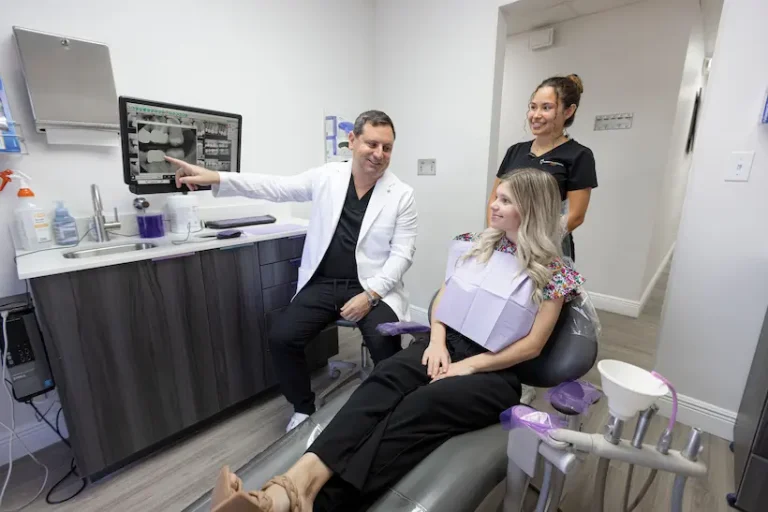
Your first visit after years away is usually focused on understanding your current oral health. It may include digital X-rays, a comprehensive exam, photos if needed, a gum health evaluation, a cleaning if appropriate, and a conversation about your concerns and goals.
At Florida Smiles Dental, we approach this step by step. We do not expect you to know exactly what you need before you come in. That is what the appointment is for.
A Conversation About Your Concerns
Before treatment decisions are made, we want to understand what brought you in.
Are you having pain? Are you embarrassed? Are you worried about cost? Are you interested in improving your smile? Are you nervous because of a previous experience?
This conversation helps us tailor the visit to you. Some patients want every detail explained. Others prefer a simpler overview. Some need breaks. Some want to focus only on the most urgent issue first.
There is no one-size-fits-all approach.
Digital X-Rays and a Comprehensive Exam
Digital X-rays allow your dentist to see areas that are not visible during a visual exam, such as between teeth and below the gumline. They can help detect cavities, bone loss, infections, impacted teeth, and other concerns.
Your comprehensive exam may include checking each tooth, existing fillings or crowns, gum health, bite alignment, jaw function, and soft tissues in the mouth.
Dr. Peter Scerbo and the Florida Smiles Dental team focus heavily on patient education and comfort. That means we want you to understand what we see, why it matters, and what your options are.
Photos, Gum Evaluation, and Oral Health Screening
In some cases, photos may be taken to help document areas of concern or show you what we are seeing. This can make treatment recommendations easier to understand.
We may also evaluate your gums by measuring periodontal pockets around the teeth. These measurements help determine whether you have healthy gums, gingivitis, or signs of periodontal disease.
An oral health screening may also include checking the cheeks, tongue, gums, palate, and other soft tissues for anything unusual.
A Cleaning If It’s Appropriate That Day
Some patients can have a regular dental cleaning during the first visit. Others may need a different type of cleaning if there is heavy tartar buildup or signs of gum disease.
This is important: needing a deep cleaning does not mean you failed. It simply means your gums and supporting structures may need more focused care.
If a cleaning is not appropriate that day, we will explain why and recommend the next step.
Will I Need a Deep Cleaning or More Dental Work?
Maybe. Maybe not.
It depends on your teeth, gums, X-rays, symptoms, and how much buildup is present. Some patients who have not been to the dentist in years only need a professional cleaning and a plan to maintain their oral health. Others may need fillings, periodontal therapy, crowns, extractions, implants, cosmetic treatment, or a staged restorative plan.
The key is not to assume everything has to be done at once.
When a Regular Cleaning May Be Enough
If your gums are generally healthy and tartar buildup is limited, a regular cleaning may be enough to help you get back on track.
After that, your hygienist and dentist may recommend a maintenance schedule, usually based on your risk for cavities or gum disease. For many patients, routine visits every six months help prevent small issues from becoming bigger problems.
When Scaling and Root Planing May Be Recommended
If there are signs of periodontal disease, your dentist or hygienist may recommend scaling and root planing, often called a deep cleaning.
This type of cleaning goes below the gumline to remove plaque, tartar, and bacteria from root surfaces. It is typically recommended when gum pockets are deeper than normal or there are signs that the supporting structures around the teeth are affected.
If this is recommended, we will explain what to expect, whether numbing is needed, how many visits may be involved, and how follow-up care works.
How We Prioritize Treatment Step by Step
If you need multiple treatments, we can help prioritize them.
Usually, urgent problems come first. That may include pain, infection, broken teeth, or active decay. Then we may address gum health, restorative needs, and cosmetic goals.
Having a plan does not mean everything has to happen immediately. It means you finally know what is going on, what matters most, and what steps can help you regain control of your oral health.
For many patients, that alone brings a huge sense of relief.
What If I’m Nervous About Pain or Bad News?
Dental anxiety is extremely common. You would be surprised how many confident, successful adults still feel nervous sitting in a dental chair.
That fear can come from childhood experiences, fear of pain, embarrassment, loss of control, or simply not knowing what to expect. Our team understands that.
Many patients tell us they feel calmer simply because someone took the time to explain things clearly instead of rushing them.
Tell Us Before We Start
If you are anxious, say so when you schedule or when you arrive. You do not need to hide it.
You can tell us things like:
- “I haven’t been in years and I’m embarrassed.”
- “I’m nervous about pain.”
- “I had a bad experience before.”
- “I need things explained slowly.”
- “I’m afraid of what you’ll find.”
These are normal concerns. Sharing them helps us take better care of you.
Ask Questions, Take Breaks, and Go at Your Pace
A dental visit should not feel like something happening to you without explanation. You can ask what we are doing, why we are doing it, and what comes next.
If you need a break, let us know. If you want to understand your X-rays, ask. If you are unsure about a treatment recommendation, we can explain the reasoning and options.
Our goal is to help you feel informed, not pressured.
Why Having a Plan Usually Feels Better Than Not Knowing
Avoidance can make anxiety worse. When you do not know what is happening, your mind may fill in the blanks with worst-case scenarios.
A dental exam replaces uncertainty with information.
Even if treatment is needed, having a plan often feels better than waiting and worrying. You can make decisions based on facts, timing, priorities, and your comfort level.
How to Prepare for Your First Appointment After Years
You do not need to do anything perfect before your appointment. You do not need to apologize repeatedly. You do not need to explain every reason you waited unless you want to.
Just come as you are.
Still, a few simple steps can help make the visit smoother.
Write Down Symptoms or Questions
Before your visit, write down anything you have noticed, such as:
- tooth pain
- sensitivity to cold or heat
- bleeding gums
- bad breath
- loose teeth
- jaw pain
- broken fillings
- old crowns that feel different
- cosmetic concerns
- areas where food gets stuck
It can also help to write down your questions. Many people feel nervous during the appointment and forget what they wanted to ask.
Bring Insurance Information or Ask About Payment Options
If you have dental insurance, bring your information with you. If you do not have insurance, you can still call and ask what options may be available.
Cost concerns are common, and they should not stop you from at least getting information. Once you know what is happening, you can discuss priorities and possible next steps.
Don’t Try to “Fix Everything” Before You Come In
Some patients feel tempted to brush aggressively, over-floss, use whitening products, or try home remedies right before the appointment because they feel embarrassed.
Please do not hurt your gums or teeth trying to make everything look perfect.
Brush and floss normally if you can, but remember: we are here to help with the things you cannot fix at home. That is the point of professional care.
Getting Back on Track at Florida Smiles Dental
Florida Smiles Dental was built around creating a welcoming environment where patients feel comfortable asking questions and getting honest answers.
Whether you are coming in for a cleaning, cosmetic consultation, restorative treatment, emergency dental concern, or simply because something hurts, our Fort Lauderdale and Lighthouse Point teams are here to help you feel comfortable again.
You do not have to know what treatment you need. You do not have to have the perfect words when you call. You can simply say:
“I haven’t been to the dentist in years, and I’d like to schedule an appointment.”
That is enough.
Fort Lauderdale Dental Office
If you live or work near Fort Lauderdale, our team can help you restart dental care with a comprehensive visit, clear explanations, and a judgment-free approach.
Whether you need preventive care, restorative dentistry, gum health support, cosmetic options, or help with dental anxiety, we will walk through the process with you step by step.
Schedule at our Fort Lauderdale location.
Lighthouse Point Dental Office
Our Lighthouse Point team also welcomes patients who have not seen a dentist in years. If you have been delaying care because of fear, embarrassment, cost concerns, or uncertainty, we can help you take the next step.
The first visit is about understanding your oral health and creating a plan that feels manageable.
Schedule at our Lighthouse Point location.
Conclusion: It’s Not Too Late to Start Again
If you have not been to the dentist in years, the most important thing to know is this: you are not alone, and you are not beyond help.
Maybe you need a cleaning. Maybe you need a deep cleaning. Maybe you need a few fillings or a more complete treatment plan. Or maybe you just need reassurance and a fresh start.
Whatever the case, avoiding the dentist usually creates more stress than making the appointment.
At Florida Smiles Dental, our goal is not to shame you for where you are. It is to help you move forward with clarity, comfort, and confidence.
Sometimes the hardest part is simply making the appointment.
After that, we’ll walk through the rest together.
FAQs About Going Back to the Dentist After Years
No. It is not too late. Even if it has been many years, a dentist can evaluate your teeth and gums, explain what is happening, and help you create a step-by-step plan. The sooner you schedule, the sooner you can stop guessing and start moving forward.
No. At Florida Smiles Dental, we are not here to judge you. Many patients go years without dental care for reasons like anxiety, finances, family responsibilities, insurance changes, or bad past experiences. Our focus is on helping you now.
They might, especially if your gums are inflamed or you have not had a cleaning in a long time. Bleeding gums are common when plaque and tartar have built up around the gumline. Your dental team can evaluate whether you need a regular cleaning or periodontal care.
Most likely, yes. Digital X-rays help your dentist see cavities, bone levels, infections, and other issues that may not be visible during a regular exam. They are especially useful if it has been years since your last dental visit.
If you need several treatments, your dentist can help prioritize them. Urgent issues like pain, infection, or active decay usually come first. Then your team can help you plan the rest in a way that feels more manageable.
Yes. In fact, those are some of the most common reasons patients delay dental care. You can tell our team that you are nervous when you call or when you arrive. We will take your concerns seriously and help you feel more comfortable.
You can keep it simple:
“I haven’t been to the dentist in years, and I’d like to schedule an appointment.”
That is all you need to say to get started.